
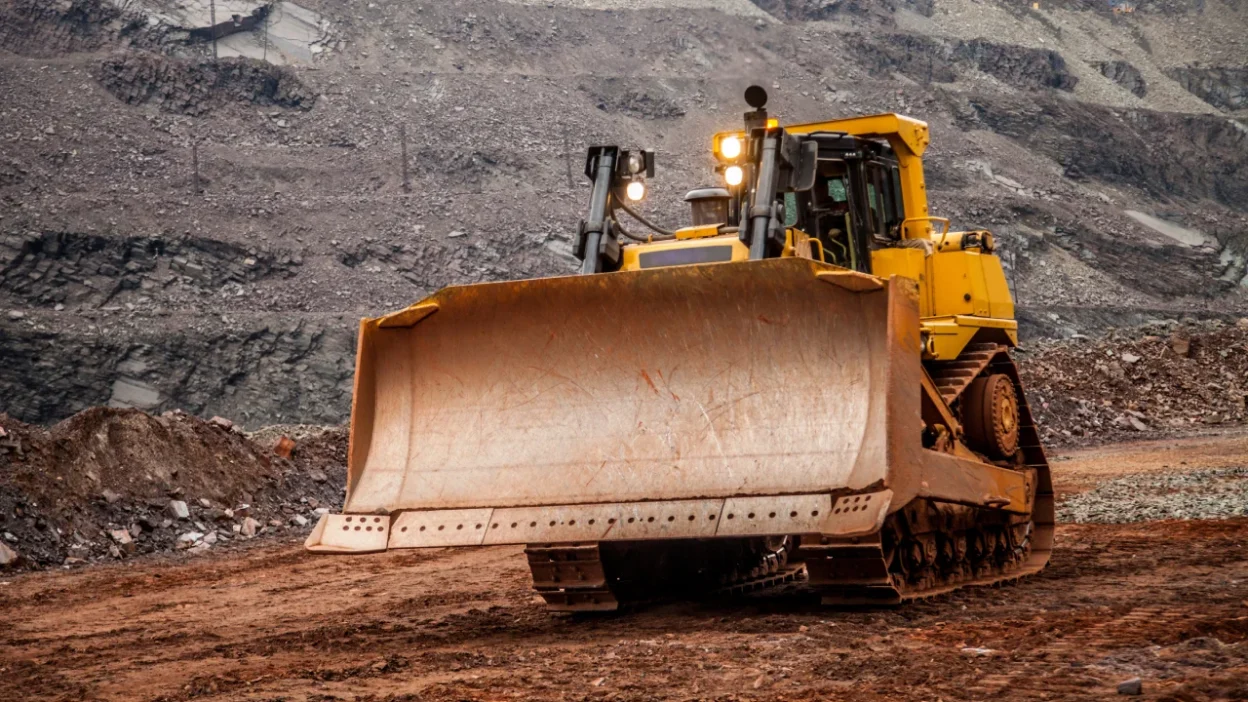
There are not many machines used in construction and related industries that boast the impressive earth-moving capabilities of bulldozers. If you need to clear the ground for a new highway, prepare a site for construction, extract useful materials from the ground, and level rough terrain, a bulldozer is the first machine to show up and the last to leave.
Designed with tremendous pushing force, high traction, and outstanding durability, the bulldozer has become an indispensable tool in construction, mining, forestry, agriculture, and infrastructure development worldwide. They are specially designed to perform effectively in the most challenging conditions, moving enormous amounts of earth, rocks, sand, rubble, and other materials.
Modern bulldozers are much more sophisticated than their predecessors. Equipped with economical engines, comfortable operator cabs, efficient hydraulics, GPS-assisted grading systems, and highly durable undercarriages, modern machines help increase productivity and reduce operational expenses.
Understanding bulldozers is important for any contractor, construction project manager, machinery buyer, or anyone else dealing with heavy equipment.
Key Takeaways
To fully understand what follows, here are the main things that you will take away from this guide:
- Know what a bulldozer is and how it operates in performing earth-moving, land-clearing, and grading tasks.
- Get acquainted with the various components of the machine – the blade, tracks, engine, hydraulic system, and ripper- and see how all of these contribute to the machine’s performance.
- Learn about the different kinds of bulldozers and know the models that are most appropriate for construction projects, mining operations, farming, road building, and other applications.
- See the many applications of a bulldozer in industry and construction, and know what the various tasks for which a bulldozer is suitable.
- Be aware of the benefits of using bulldozers for construction and earth-moving projects.
- Understand the factors to consider when buying a bulldozer, such as your project needs, the terrain, engine horsepower, blade type, and other considerations.
- Learn about the appropriate Hengwang bulldozer models for your project, based on its size and scope.
- Understand the reasons behind choosing Big Boss Machines when buying bulldozers.
What Is a Bulldozer?
A bulldozer is a powerful machine mainly used for pushing, clearing, grading, digging, and leveling land, and for moving soil or other materials on site. A bulldozer has a large diesel engine mounted on crawler tracks or large wheels, and a massive steel blade at the front of the machine for pushing material.
In contrast to excavators that dig into the ground or loaders that move materials around the site, bulldozers are designed to push heavy materials, providing greater stability during such work.
The traction of these machines is ensured by their wide crawler tracks, which evenly distribute the machine’s weight over the ground surface, allowing this equipment to operate where wheeled machinery cannot. The hydraulic system installed in modern bulldozers provides precision during the operation and enables fine grading of the land and soil.
Main Components of a Bulldozer
Every bulldozer features several key components that provide optimal efficiency. Learning about them makes it easier for operators and buyers to understand the machine’s operating mechanism.
Engine
The engine is considered the main component of the bulldozer because it provides the horsepower needed to move large masses of soil. Contemporary diesel engines deliver high torque, fuel efficiency, and reliable continuous operation.
Blade
Located at the front of the machine, the blade is the main component of the bulldozer and is essential to its operation. The blade moves soil, sand, gravel, rocks, snow, and other debris.
Tracks (Undercarriage)
The crawler track offers high levels of traction and stability. It helps in reducing ground pressure, increasing traction, and allowing the bulldozer to operate effectively in rough, wet, sandy, and stony ground.
Hydraulic System
The hydraulic system enables the operator to control blade raising, lowering, tilting, and angling as needed for the job at hand.
Ripper
The ripper is one of the attachments fitted to the rear of many bulldozers, and its role is to rip up compacted soils, frozen ground, asphalt, or rocks before grading or excavation.
Operator’s Cabin
Bulldozers come with large cabins offering comfortable seats, air conditioning, control systems, digital display, and visibility.
How Does a Bulldozer Work?
The functionality of the bulldozer is based on the use of the engine, hydraulic power, and traction to facilitate material handling. The engine drives the tracks that allow movement through rough terrain, while the hydraulic power regulates the movements of the blade.
The adjustment of the blade depends on the nature of the operation being done. When it comes to land clearing, the blade moves at lower levels to clear all the plants and debris from the ground, while during grading operations, the blade moves with accuracy to ensure that leveled surfaces are formed. If the bulldozer has a rear ripper, it first breaks the hard surface before pushing the material.
Types of Bulldozers
Different types of bulldozers can be selected based on the type of project. It is important to choose an appropriate type of bulldozer based on terrain, materials, project size, etc.
1. Crawler Bulldozers
The crawler bulldozer is the most widely used in the construction and mining industry. They have excellent traction and stability due to their tracks, which make them highly efficient on rough terrains like muddy, rocky, sandy, etc.
They are best suited for:
- Construction Sites
- Mining Operations
- Road Construction
- Quarry Work
- Earth Moving
- Land Clearing
They are well-suited for applications that require a high amount of pushing force.
2. Wheeled Bulldozers
In wheeled bulldozers, tracks are replaced by tires, which make them faster and more agile on firm ground. They are mostly used in the following areas:
- Industrial areas
- Urban construction sites
- Yard operations
- Road works
- Short-distance earthworks
Despite having lower traction than crawler bulldozers, wheeled bulldozers move faster from one work site to another.
3. Mini Bulldozers
These mini bulldozers are small vehicles that can only be used in areas where larger machinery cannot enter due to limited space. The mini bulldozer is suitable for:
- Building houses
- Landscape construction
- Farming
- Minor road work
- Utility installation
Due to their small sizes, they can be operated effectively within confined spaces.
4. Swamp Bulldozers
Swamp bulldozers are equipped with wider tracks to distribute weight over soft terrain without sinking into the ground. They are used in:
- Wetlands
- Marshes
- Construction in soft soils
- Agriculture
- Pipeline construction
The design of these machines allows them to work in places where ordinary bulldozers might get stuck.
Bulldozer Blade Types
The blade is an integral component of a bulldozer because it affects the bulldozer’s effectiveness in performing various tasks. Selecting an appropriate blade is essential because it enhances productivity.
Straight Blade (S-Blade)
As the name suggests, the straight blade does not have any side wings, making it ideal for performing highly accurate operations, including fine grading.
Universal Blade (U-Blade)
The universal blade features large side wings and a curved shape that make it effective at transporting substantial loads over longer distances. This blade type is popularly used in mining projects and other similar operations.
Semi-U Blade
A semi-U blade combines the characteristics of both straight and universal blades, which means it provides excellent penetration while still being able to transport some loads.
Angle Blade
As its name suggests, the angle blade can be mounted on either side of the bulldozer. The blade is effective when it comes to road construction and snow removal.
Major Applications of Bulldozers
There are a variety of industries in which bulldozers are widely used for their exceptional pushing power and versatility.
Site Preparation for Construction
No matter what kind of building project is about to commence, it is imperative that the land be cleared and prepared before work begins. Bulldozers facilitate this process by clearing vegetation, rocks, and debris, and by leveling the ground.
Road Construction
Road construction requires bulldozers to clear and prepare the land, cut slopes, and make the road smooth and stable before paving.
Mining Activities
Miner-friendly equipment must withstand harsh working conditions. Bulldozers help move overburden, push mined material, maintain haulage roadways, and perform preparatory work at the mining site.
Land Clearing
Large-scale forest and agricultural land clearing requires removing any unwanted vegetation or rocks. Bulldozers are efficient machines that can carry out such tasks.
Agricultural Applications
Bulldozers are used to level the field, create irrigation canals, build roads on farms, clear vegetation from the land, and prepare the land for planting.
Quarrying Operations
Quarries use bulldozers to shift loose rocks, keep the working area tidy, clear access to roads, and assist in the excavation process. Their toughness enables them to handle very rough environments.
Disaster Recovery
After natural disasters such as floods, earthquakes, and storms, bulldozers are the ones most involved in clearing obstacles from roads, removing debris, helping rebuild buildings, and assisting in rescue missions.
Snow Plowing
In regions with heavy snowfall, bulldozers fitted with appropriate attachments can be of great help in clearing snow from main streets, airports, industrial zones, and public areas.
Benefits of Using Bulldozers
Bulldozers are considered one of the most profitable purchases for construction companies due to their many advantages.
- Outstanding pushing capacity when dealing with heavy loads
- Superior traction in hard ground conditions
- Extreme ruggedness in rough conditions
- Versatility in various industries
- Greater productivity and shorter time of work completion
- Reduced need for manual labor
- Efficient functioning during unfavorable weather conditions
- Extended lifespan with correct maintenance
- Ability to work with different attachments
- Cost-effectiveness due to efficient working
These advantages make bulldozers among the most essential vehicles for various projects, including large-scale infrastructure projects.
Recommended Bulldozers for Different Applications
Choosing the right bulldozer will depend on the scale of the work you have. Hengwang supplies various types of bulldozers for use in a range of applications.
HW08 Bulldozer
The HW08 Bulldozer is the best type of compact bulldozer for landscaping, agriculture, house construction, and other small-scale earthmoving activities. It can be used in narrow areas and has good fuel consumption.
HW13 Bulldozer
HW13 Bulldozer is the best machine for medium-scale activities such as grading the ground, preparing land, constructing roads, and other infrastructure developments.
HW16DS Bulldozer
HW16DS Bulldozer is a machine that delivers reliable performance for construction companies that need their daily earthmoving work done by this machine.
HW16D Bulldozer
The HW16D Bulldozer offers greater stability and good pushing capability, making it suitable for road building and development, as well as commercial construction.
HW17DE Bulldozer
The HW17DE Bulldozer is designed for operators seeking greater efficiency and productivity. It is very efficient at tasks such as grading and site development, and moderate earthmoving.
HW22D Bulldozer
The HW22D Bulldozer is made for heavy construction projects, quarrying, and infrastructure development. The power and structural strength of this machine make it suitable for handling demanding workloads.
HW26D Bulldozer
For large-scale construction projects and industries, the HW26D Bulldozer is very powerful and delivers good traction and grading performance.
HW32D Bulldozer
The HW32D Bulldozer is a highly productive piece of equipment designed for use in mining, quarries, major road construction, and difficult infrastructure projects where productivity is the key factor.
HW34D Bulldozer
The HW34D Bulldozer is the best in its class, delivering impressive performance in tough conditions where mining work, large-scale infrastructure projects, and other extremely difficult tasks must be performed.
How to Choose the Right Bulldozer
Selecting the appropriate bulldozer hinges on identifying all the specific details of your planned project. There are quite a few main elements that you should think through to make a good decision.
Project Size
If the work area is relatively small, then the size of the bulldozer shouldn’t be either. Yet in the case of large construction or mining projects, much stronger machines are needed to run continuously without interruption under high loads.
Working Conditions of Terrain
Taking into account the surface where your bulldozer will do the job, such as rock, mud, sand hills, or solid soil, should be considered. Crawlers usually have a better grip, which makes them more stable and safe.
Blade Type
Careful blade type selection is a sure way of getting your machines working really hard.
Engine Power
The bigger the engine, the faster the material will be shoveled and the greater the output will be.
Fuel Consumption
Fueling is one of the main factors that determines overall equipment running costs. Purchasing a fuel-saving bulldozer is a way of minimizing such expenses.
Maintenance Services
Good servicing and maintenance will be responsible for the health and longevity of your machine while at the same time eliminating the potential need for unexpected equipment failure.
Why Buy Heavy Equipment from Big Boss Machines?
Buying heavy equipment isn’t just about buying a machine; it is about partnering with a reliable company. Big Boss Machines is a provider of premium heavy equipment, including bulldozers, for construction, mining, road work, and land development projects of all sizes.
For your small-scale projects, you may need compact machines like the HW08 Bulldozer, whereas the HW32D and HW34D Bulldozers are perfect for large projects. Big Boss Machines will guide you to buy the right machine as per the needs and budget of your project.
In addition to quality products, reasonable prices, authentic equipment, and efficient customer service, Big Boss Machines ensures that its customers have easy access to spare parts and after-sales service. This has earned it a reputation as the best heavy machinery supplier in the UAE for contractors, builders, and other industries seeking reliable heavy equipment.
Final Thoughts!
Despite being invented many decades ago, bulldozers continue to be some of the most useful pieces of machinery in the heavy equipment sector. The exceptional capabilities of bulldozers to clear land, move large quantities of material, prepare sites for construction, grading, and even mining make them highly sought after in various industries.
There are various types of bulldozers, from the small HW08 Bulldozer to the huge HW34D Bulldozer. With insight into the types of bulldozers, blade configurations, applications, and buying considerations, business entities can make the most of their purchases.
Whether you are looking to expand your construction equipment fleet or buy your very first bulldozer, purchasing the right bulldozer is guaranteed to pay off big time in the long run.
Frequently Asked Questions!
Essentially, a bulldozer is the main machine used to push materials such as soil, rocks, sand, and debris. It is a common piece of equipment in the areas of land clearing, grading, site preparation, mining, road construction, and infrastructure development.
The primary types of bulldozers include crawler, wheel, mini, and swamp bulldozers. Different types of bulldozers are adapted for different kinds of terrain and project conditions.
Bulldozers are widely used in construction, mining, agriculture, forestry, quarrying, road building, infrastructure development, disaster recovery, and land development projects.
It is quite simple; the right bulldozer depends on some factors: project size, terrain conditions, material type, engine power, blade configuration, fuel efficiency, and maintenance support. Matching the machine to your operational requirements will help you achieve better productivity and lower running costs.
Models like the HW26D Bulldozer, HW32D Bulldozer, and HW34D Bulldozer should be the preferred type of bulldozer for large construction, mining, quarrying, and major infrastructure projects, as they offer excellent pushing capability, high horsepower, and outstanding traction!