
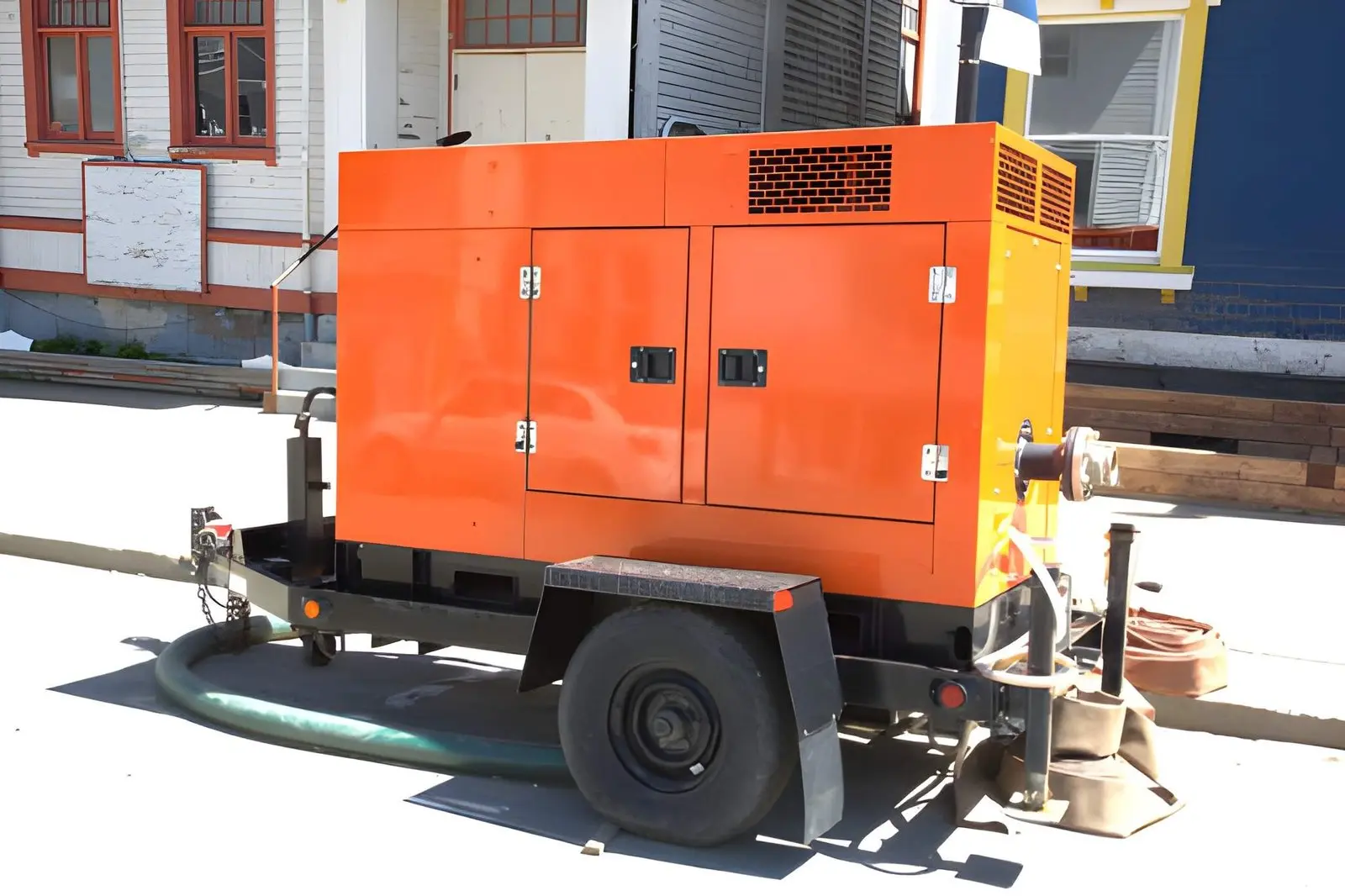
Head to any construction site, and you will be greeted with the constant noise of air compressor operation. Whether it’s drilling concrete, spray painting metal surfaces, operating a jackhammer, or inflating massive tires, compressed air is silently driving some of the most crucial equipment used there.
Today, air compressors are considered one of the most vital elements of construction machinery, providing convenient, effective, and flexible energy for all kinds of work. Compared with electric machines, air-powered equipment is not only lightweight but also durable enough to operate in adverse conditions with minimal maintenance needs.
However, have you ever thought about how an air compressor works? What types can this equipment have? What parts make the whole machine work effectively? And why do we need this equipment so much on construction sites?
This post provides answers to these and many other questions about compressors.
Key Takeaways
Before getting into specifics, here are some of the key points you will learn from this guide:
- The air compressor transforms atmospheric air into compressed air to power various kinds of construction machinery.
- There are different types of compressors used for specific purposes and applications in different environments.
- Knowing the parts of an air compressor will make it easier to perform maintenance and extend its lifespan.
- Construction sites require portable diesel air compressors because of their flexibility and constant airflow.
- Getting the right airflow (CFM), pressure (PSI), and compressor will increase productivity and efficiency.
What Is an Air Compressor?
In simple terms, an air compressor is equipment that draws in atmospheric air, compresses it into a small space, and stores it at higher pressures for later use. The compressed air serves as a reliable power source that can run all kinds of pneumatic tools, machines, and other equipment.
Imagine an air compressor as a battery that can be charged to store electricity for later use. In this case, an air compressor serves as a battery that stores compressed air. Whenever a tool, such as an impact wrench or jackhammer, is attached to the compressor, the compressed air comes out through hoses, supplying the necessary force to drive the equipment.
Another important advantage of air compressors is their flexibility because they enable you to do more work than you would be able to perform with electrical tools. With the help of an air compressor, you don’t have to use several machines to perform the same work because the compressed air allows using one machine to operate several tools.
There are many sizes and types of air compressors nowadays, depending on the contractor’s needs.
Importance of Compressed Air in Construction
A construction project involves several activities that require a continuous power supply. Compressed air makes a difference, helping perform tasks such as breaking concrete and using drilling machines. Compressed air is better than electricity in dusty and humid areas. Pneumatic tools are lighter than their electrical counterparts, allowing workers to work comfortably without feeling tired even after long hours.
Other notable benefits include reliability. Diesel-powered portable air compressors can run in places with no access to an electrical power supply. They are therefore essential in projects involving infrastructure construction, mining, pipeline installation, and road construction.
The importance of compressed air has made it receive the nickname “fourth utility” after electricity, water, and gas.
How Does an Air Compressor Work?
There are various models of air compressors available at present; however, irrespective of the type used, their functioning principle is quite similar. They absorb the air from the atmosphere, compress it, store it, and then supply it when compressed air is needed.
Now, let us have a look at this process.
Step 1: Intake of Air
Each compression cycle starts with absorbing fresh air from the atmosphere into the compressor through the intake valve. The air before entering the chamber gets filtered with the help of the air filter.
The significance of the above process is even greater at construction sites due to airborne dust. This is because clean air not only prevents wear and tear of inner parts but also ensures efficient machine performance.
Step 2: Air Compression
Once it reaches the machine, the air enters the compression chamber, and the amount of space that it occupies is greatly decreased. Due to this reduction in space, the air pressure rises.
The compression process varies depending on the type of compressor being used. Some compressors use piston motion within cylinders, while others operate using screws and even impellers in rotation. Despite this variation in technology, the result is high-pressure compressed air sufficient for heavy machinery operations.
This is where the actual energy conversion process occurs.
Step 3: Cooling the Compressed Air
Compression of air produces heat. Uncontrolled heating will result in inefficiency, wear and tear of internal parts, and decreased compressor life.
To avoid these issues, air compressors have cooling systems that help remove heat produced during the compression process. There are various forms of cooling depending on the type of air compressor, including air cooling, oil cooling, and water cooling systems.
Proper cooling will not only help save the machinery but also maintain the stability of the compressed air.
Step 4: Air Storage
After the air reaches the right pressure, it can be stored in an air receiver tank or sent straight to the connected equipment.
A storage tank works similarly to a reservoir where there will always be an adequate supply of compressed air despite variations in demand throughout the day. It helps minimize unneeded compressor cycles, increases efficiency, and ensures a constant flow of airflow for pneumatic tools.
Compressors with large receiver tanks are often needed for large construction projects due to numerous people and tools.
Step 5: Air Delivery
The last step in the process is delivering compressed air to the connected tools and equipment.
On its way to the equipment, the air goes through pressure regulators to control the exact pressure supplied by the system. Various pneumatic tools need different pressure levels, so regulators ensure they receive the correct pressure.
Once the trigger on the pneumatic tool is pressed, compressed air gets to the tool through the hose, providing the pressure needed to make drills, nailers, impact wrenches, spray guns, grinders, and other tools work.
How Air Compressors Convert Air into Power
It has always puzzled many individuals how air, which seems very common and ordinary in nature, has sufficient force to drive massive construction machines. It is all a matter of physics.
In its natural state, air normally takes up a lot of volume at normal atmospheric pressure levels. As the air compressor compresses the same air into a much smaller volume than before, the air’s pressure rises tremendously. The increased pressure possesses some potential energy.
Once the compressed air is released via a hose in a pneumatic machine, the pressure quickly drops, and potential energy is converted into mechanical energy. It drives pistons, motors, hammers, and spinning parts in the machine to help operators achieve their work easily.
This is why compressed air is one of the safest sources of industrial power.
Factors That Affect Air Compressor Performance
Several factors affect the performance of air compressors. There are many types of compressors; therefore, different factors influence their ability to provide sufficient performance to meet the needs of a particular construction project.
Airflow (CFM)
The Cubic Feet per Minute (CFM) is used to determine the volume of compressed air delivered by a particular machine. High CFM allows the use of large pneumatic tools or several tools simultaneously. Proper CFM selection is important to avoid reduced pneumatic tool efficiency due to lack of airflow.
Pressure (PSI)
The pressure at which the device delivers compressed air is determined by PSI, or pounds per Square Inch. Each pneumatic tool has its particular PSI requirements. Low pressure results in inefficiency, whereas excessive pressure can damage the tools and compressor.
Duty Cycle
The duty cycle determines a compressor’s ability to operate without cooling. Heavy-duty construction requires a high or constant-duty-cycle compressor.
Environmental Factors
Dust, temperature, and moisture can all affect compressor performance. Contemporary construction-grade air compressors come equipped with sturdy filters, cooling mechanisms, and environmental protection features that allow for effective operation outdoors.
Types of Air Compressors
There are various types of air compressors available in the market, each made to cope with specific loads and operational conditions. While some are best for infrequent use in a small workshop, other types are manufactured specifically to operate continuously at large construction sites, mining works, and industries.
It is necessary to know the differences between types of air compressors to find the right choice for particular purposes.
1. Reciprocating Air Compressors
Reciprocating air compressors, or simply piston compressors, are among the oldest types of air compressors in existence. These air compressors operate with one or several pistons moving up and down inside cylinders to compress and store compressed air in a receiver tank.
The best option for such compressors is intermittent operation. They are very popular among small contractors, auto repair workshops, repair centers, and private construction sites because they are inexpensive, easy to use, and maintainable. However, such compressors are not suitable for continuous heavy loads because they may cause overheating.
Most appropriate for:
- Residential construction projects
- Automotive workshops
- Small-scale manufacturing operations
- Maintenance tasks
- Do-it-yourself and light industrial purposes
2. Rotary Screw Air Compressors
Rotary screw air compressors have become popular in contemporary construction and industrial projects because they generate compressed air continuously, without interruptions. Unlike piston-type air compressors, rotary screw compressors have two rotating screws (called rotors), which compress the air moving inside the compressor.
One of the main benefits of these air compressors is their ability to operate continuously during an entire shift and generate a constant flow of compressed air. They are comparatively quiet and economical in operation and maintenance.
Large-scale construction companies depend greatly on rotary screw air compressors to run their pneumatic tools, drills, sandblasters, and concrete breakers since they offer efficient performance even in tough working environments.
Benefits include:
- Consistent flow of air for constant operations
- Increased efficiency
- Reduced sound levels during operation
- Greater longevity
- Efficient performance in tough working environments
Ideal for:
- Construction work
- Road construction
- Infrastructure development
- Industrial facilities
- Mineral extraction sites
3. Centrifugal Air Compressors
Centrifugal air compressors are engineered to operate in industries where massive amounts of compressed air are needed. Unlike piston and screw compressors, centrifugal units use impellers to accelerate the flow of air into pressure.
Due to their complex engineering design, centrifugal air compressors are mostly used in big industrial areas, petrochemical companies, refineries, power generating stations, etc., but not on conventional construction sites.
Their ability to produce large volumes of airflow with zero vibration and high efficiency makes them a perfect choice for industries where round-the-clock compressed-air operation is required.
Some common applications include:
- Oil and gas industry
- Chemical industry
- Power generation
- Steel plants
- Industrial production units
4. Portable Air Compressors
Portable air compressors are manufactured for construction jobs that require mobility. As they are mounted on wheels or trailers, they can be moved easily from one job location to another, ensuring work continues uninterrupted without requiring stationary power sources.
Most portable compressors used at construction sites have diesel engines because they work in remote locations without electricity. They are tough and weatherproof, and deliver high volumes of airflow, making them indispensable for infrastructure construction, mining and quarrying, and road construction.
Portable compressors come in varied airflow capacities, enabling contractors to select a model according to the size of their project.
Some main advantages of using portable air compressors are:
- Easy transportation across job sites
- Reliable operation in remote areas
- Continuous airflow for pneumatic tools
- Durable design for harsh environments
- Excellent fuel efficiency
Key Components of Air Compressors
Apart from an engine and a tank, compressors have several components that help in sucking, compressing, cooling, filtering, storing, and distributing air safely.
Air Intake and Filter
The filtration process starts at the intake level. A filter separates dust, pollen, and other debris to prevent them from entering the compression chamber. On construction sites, the filter is under continuous threat from concrete dust; cleaning it frequently will protect internal parts and keep the air delivered clean.
Compression Element
This is the main component – pistons and cylinders in reciprocating type, intermeshed rotors in rotary screw type, and impellers in centrifugal type. Efficiency, durability, and heating depend upon precision engineering and materials used.
Drive System
An engine or a motor drives the compression element. Couplings, belts, and gears help to transmit energy. If it is an electric engine, a variable frequency drive controls the speed of the motor according to demand.
Cooling System
Compression generates heat. Air-cooling uses fans and finning systems; large-scale systems may involve water and oil cooling. Aftercoolers help in cooling the compressed air before it enters the tank, causing water condensation and thereby limiting the amount of water entering the tools.
Oil System (If Applicable)
Oiled machines have the oil circulating to provide lubrication, cooling, and minimize friction. The oil gets separated from the air stream so that the tools get cleaner air. In cases where absolute purity is needed, for example, certain types of finishing work, the oil system gets eliminated.
Receiver Tank
This tank stores the compressed air and helps reduce pulsations, as well as provides the maximum possible supply without running the compressor continuously.
Controls and Safety Devices
Pressure switches turn the machine on and off. Unloaders help release pressure during idle time to reduce the load on the motor. Safety valves help prevent over-pressuring. Pressure gauges measure the pressure inside the tank and pressure lines.
How to Choose the Right Air Compressor?
Selecting an air compressor involves considering your project’s airflow, pressure, and mobility needs. You should not go for the largest air compressor you find; instead, choose one that matches your job load needs for efficiency and low running costs.
Determine Your Airflow Requirements (CFM)
CFM is a measurement of the compressed air delivered by the compressor. Small-scale repairs and maintenance jobs suit the Univ 125 CFM (UDS-125S), medium-scale construction the Univ 185 CFM (UDS-185S) or Univ 265 CFM (UDS-265S). Infrastructure projects, quarrying, and mining jobs will require higher-airflow-capacity compressors such as the Univ 390 CFM (UDS-390S), 530 CFM (UDS-530S), or 750 CFM (UDS-750S).
Take into Account the Required Pressure (PSI)
In addition to CFM, consider the PSI rating of the compressor to make sure that it suits the pressure demands of your pneumatic tools. The appropriate PSI allows efficient tool operation and avoids unnecessary wear and tear.
Pick the Right Power Source
Select an electric compressor when working indoors with access to electricity. If the construction project is located outside and has no access to electricity, a diesel air compressor would be a better choice.
Consider Portability
If you need to use your air compressor at different locations, choose a portable or towable air compressor. It will provide more flexibility and will enhance your productivity on the construction site.
Evaluate Maintenance Requirements
Choose the air compressor that requires little servicing. Convenient maintenance will increase its longevity.
Why Choose Big Boss Machines for Air Compressors?
Selecting the right air compressor is one thing; selecting the right supplier is another. Big Boss Machines provides a variety of highly reliable diesel air compressors for construction, mining, infrastructure, quarrying, and other industrial purposes.
From small-scale repair jobs to large-scale infrastructure construction, Big Boss Machines provides a wide array of compressors according to your airflow requirements. The line of compressors includes the Univ 125 CFM (UDS-125S), 185 CFM, and 265 CFM for general construction; 390 CFM and 530 CFM for hard tasks; and 750 CFM for mining and industry.
Reasons why professionals prefer Big Boss Machines:
- Extensive range of diesel air compressors depending on project requirements.
- Dependable machines meant for tough construction environments.
- Energy-efficient equipment that runs for long hours without stopping.
- Tough construction of equipment that can handle tough sites.
- Suitable solutions for contractors, infrastructure, mining, and industrial companies.
- Quality equipment with reliable customer support.
Depending on the task at hand, you may find an appropriate air compressor from Big Boss Machines.
Final Thoughts!
Air compressors are not just auxiliary devices but the engine behind many of the construction processes. With the ability to power pneumatic tools and drills, demolition, sand blasting, painting, and machinery maintenance, compressed air ensures faster, safer, and more efficient construction processes.
Knowing how air compressors operate, their types, and the functions of major parts helps in making better purchasing decisions. No less critical, however, is selecting an appropriate compressor depending on its CFM, PSI, and portability to fit your particular requirements.
In light of the increasing complexity of construction projects, one cannot underestimate the importance of having a reliable air compressor. Working with an experienced supplier like Big Boss Machines ensures you have access to high-performing air compressors for all sorts of construction and industry needs.
Frequently Asked Questions!
An air compressor draws air from the atmosphere, compresses it by decreasing its volume, and stores it under pressure. The compressed air can be used to power pneumatic tools and machines whenever required.
Rotary screw diesel air compressors are mostly considered the best because of their continuous airflow, great mobility, and dependable service during construction work.
CFM stands for the volume of compressed air, while PSI represents the pressure of the compressed air. Both terms are important in choosing the right air compressor for your application.
The applications of air compressors in construction include operating pneumatic tools, demolishing concrete structures, drilling, building roads, sand blasting, spray painting, inflating tires, and cleaning equipment.
Some considerations that can help select an appropriate air compressor include CFM, PSI, power source, portability, duty cycle, and maintenance requirements.
Some of the things to consider when servicing an air compressor include checking the air filters, changing oils, draining moisture, checking hoses, cooling systems, and safety valves, among others.