
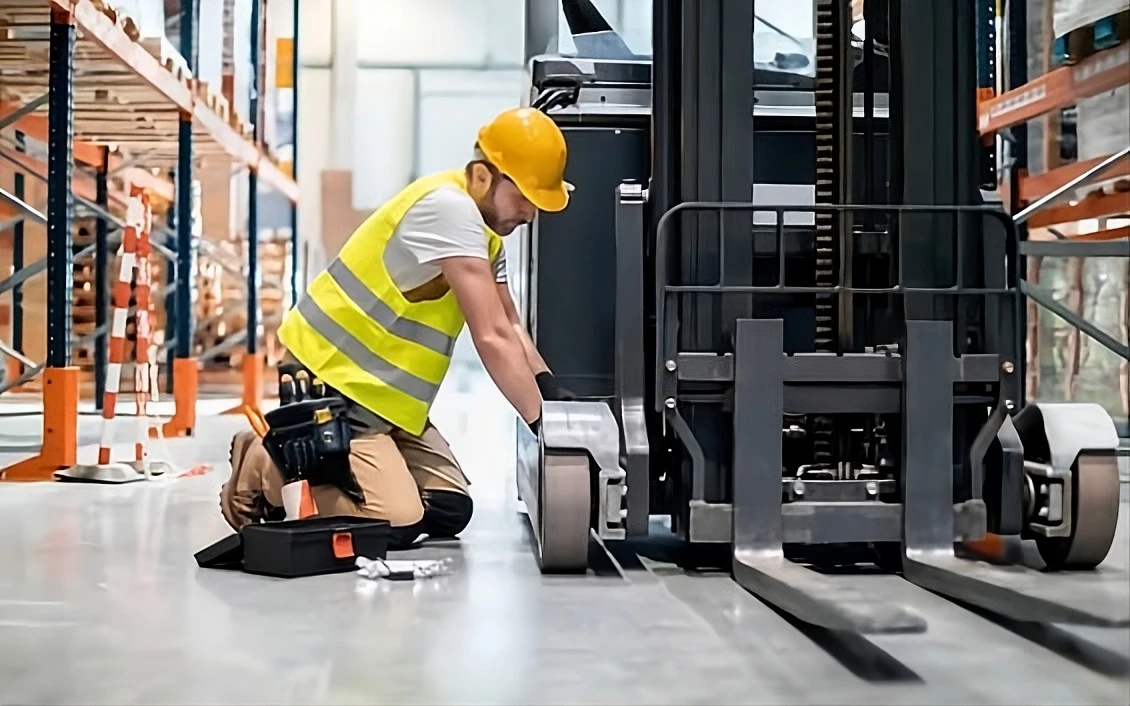
Forklifts are among the most indispensable machines found in warehouses, construction sites, production facilities, logistics hubs, and distribution centers. This heavy equipment transports tons of materials every day.
But even the most advanced and efficient machine becomes potentially dangerous and inefficient if not inspected and maintained properly. Lack of hydraulic oil, old tires, broken brakes, or forks may lead to a failure, an accident, or a costly forklift repair. That’s why conducting forklift inspection and maintenance is not only recommended but necessary for everyone who operates such equipment.
This guide tells you all you need to know about forklift maintenance, from the reasons for doing it to the items to check daily, to common mistakes to avoid and tips to increase the machine’s lifespan.
Key Takeaways
Here are the essential highlights that everyone needs to remember before getting down to the detailed forklift maintenance checklist for each day:
- Daily forklift inspections enhance workplace safety by identifying potential hazards before the forklift is put to use.
- An ideal forklift pre-operation inspection consists of the following: fork check, mast check, hydraulic system check, tire check, brake test, steering test, battery or fuel system check, and lights and safety systems check.
- Early detection of small problems helps prevent major, costly repairs, unscheduled downtime, and breakdowns.
- Frequent maintenance increases the useful life of your forklifts, enhancing their efficiency and performance.
- Forklift inspection documentation and repairs ensure compliance with workplace safety standards and provide a reliable forklift fleet.
A consistent daily forklift maintenance procedure doesn’t take much time and can greatly reduce your risks and expenses while increasing your equipment’s efficiency.
Importance of Forklift Daily Maintenance
Forklifts operate under heavy loads, repetitive actions, and a tough working environment. Gradually, wear and tear appear on different parts of the forklift, including its hydraulic systems, brakes, and steering.
Daily checks allow problems to be found and solved at an early stage, and ensure that the equipment is safe for the operator and those around them.
Some advantages of daily maintenance of a forklift include:
- Fewer workplace injuries
- Enhances operator safety
- Avoiding breakdowns
- Increases the life span of the forklift
- Makes the work of the equipment more efficient (fuel or electric)
- Saves money on maintenance
- Meets the safety standards of workplaces
- Decreases unscheduled downtime of the forklift
Just a few minutes of forklift inspection each day can save you hours or days of maintenance in the future.
Daily Forklift Maintenance Inspection List
Both visual and functional inspections constitute a comprehensive inspection of the forklift, which is crucial before starting operations.
1. Inspection of Forks
The forklift forks are the most significant parts responsible for lifting and endure immense pressure during operation.
Check forks for:
- Cracks
- Bent forks
- Uneven height of the forks
- Forks’ wear and tear
- Damage to the forks’ tips
- Loose locking pins
Even slight damage to the forks decreases the forklift’s capacity and increases the risk of dropped goods.
2. Inspect the Mast and Lift Chains
The mast is used to lift and lower loads, while lift chains transmit lifting power safely. Check for any signs of wear or damage before use.
These include:
- Rusting
- Broken rollers
- Loose bolts
- Stretching of chains
- Loss of chain links
- Lubrication issues
- Damage to mast guides
Any faulty mast system will greatly impact lifting efficiency and workplace safety.
3. Inspect Hydraulic System Parts
Hydraulic systems drive the lifting, tilting, and steering operations of the forklift. A slight hydraulic fluid leak can impair equipment operation and pose a safety risk.
Examine:
- Hydraulic hoses
- Hydraulic cylinders
- Hydraulic connections
- Leakages of fluid
- Hydraulic fluid reservoir
- Pump compartment
Any hydraulic fluid leak must be fixed before using the forklift.
4. Tire Inspection
Forklift tires affect stability, traction, braking capability, and load-carrying capacity. Depending on the facility, you may have pneumatic tires or cushion tires, but both must be inspected each day.
Check for:
- Cuts
- Cracks
- Foreign objects
- Flat spots
- Uneven wear
- Deflation (for pneumatic tires)
- Chipping or worn rubber
Tire damage impacts stability and increases braking distance.
5. Brake Systems Testing
The brake system is among the most crucial safety features of any forklift. Before handling any loads, make sure that the brake system works effectively.
Testing:
- Service brake
- Parking brake
- Brake pedal operation
- Strange sounds
- Leaking brake fluid (if applicable)
It is never advisable to operate a forklift when braking performance is inadequate.
6. Examine Steering Operation
Steering that works smoothly enables workers to navigate narrow passages and congested workspaces. Before working, check whether the steering operates smoothly.
Look out for:
- Too much steering play
- Heavy steering
- Strange vibrations
- Hydraulic steering fluid leakage
- Slow operation
Any problem with the steering must be reported right away.
7. Inspect Fluids
Maintaining proper fluid levels ensures that all the machinery operates efficiently without overheating or premature wear and tear.
Based on the type of forklift being operated, you should check the following:
- Engine oil
- Hydraulic oil
- Coolant
- Brake fluid
- Transmission fluid
- Windscreen washing liquid (if available)
Always use manufacturer-approved fluids when topping up levels.
8. Check Battery or Fuel System
This will vary depending on whether you are using an electric, diesel, gas, or LPG forklift.
Electric Forklifts
Batteries affect performance significantly.
Inspect:
- Battery charge
- Battery connections
- Battery cables
- Level of electrolyte (in the case of acid batteries)
- Battery compartment cleanliness
Loose battery connections can result in poor performance or electrical issues.
Internal Combustion Forklifts
Fuel-powered forklifts have their systems checked before operation.
Check:
- Fuel level
- Fuel hoses
- Any fuel leaks
- Connections of LPG tanks
- Condition of diesel tanks
- Security of the fuel cap
Never ignore the smell of fuel or visible leaks.
Related: Can Electric Forklifts Replace Traditional Forklifts?
9. Inspect Lights and Warning Devices
Good visibility is necessary in warehouses and loading areas. All safety devices should work properly before use.
Inspect:
- Head lights
- Tail lights
- Braking lights
- Flashing light
- Horn
- Reverse warning device
- Turning signals (if any)
These warning lights prevent accidents with pedestrians and machinery.
10. Check Seat Belts and Operator Controls
The operator’s compartment must ensure both safety and comfort.
Check:
- Condition of the seat belt
- Seat adjustment
- Steering wheel
- Pedals
- Levers
- Joystick controls
- Control panel
Damaged controls must not be overlooked, as they affect proper machinery operation.
11. Check Overhead Guard
An overhead guard shields the operator from falling objects when handling lifting activities.
Check for:
- Cracks
- Loose bolts
- Bent guard frame
- Rust
- Missing parts
Do not alter or dismount the overhead guard.
12. Examine Load Backrest Extension
The load backrest stops the cargo from moving backward towards the operator.
It should be:
- Straight
- Properly mounted
- Without cracks
- Damage free
If damaged, load stability will be compromised.
13. Examine Safety Stickers and the Capacity Plate
There must be clear safety information displayed on each forklift.
Ensure that:
- The capacity plate can be read
- Warning stickers are still visible
- Instructions to operate are readable
Replace lost stickers as soon as possible.
14. Look for Fluid Leaks Under the Forklift
Before starting the motor, check under the forklift for any fluid leaks.
Look out for:
- Oil leakage
- Hydraulic fluid
- Coolant
- Gasoline
- Transmission fluid
Fresh puddles often indicate developing mechanical problems.
15. Conduct an Operational Test
After your visual check, perform a short operational test at a safe location. When conducting an operational test, ensure that all systems respond appropriately while operating normally.
Check the following systems:
- Forward and backward motion
- Braking performance
- Steering
- Raising and lowering capabilities
- Tilt of the mast
- Horn
- Backing alarm
- Parking brake
Any strange sensation calls for the forklift to stop until the right maintenance staff checks it.
Common Forklift Problems Identified
The daily inspection process may help identify minor problems that could become larger repair jobs if left unaddressed.
Examples of some common problems identified include:
- Hydraulic oil shortage
- Damaged tires
- Battery corrosion
- Forks out of place
- Damaged lift chains
- Brake problems
- Fuel leakage
- Damage to hydraulic hoses
- Malfunctioning warning lights
- Steering problems
Addressing these problems early significantly reduces repair costs and equipment downtime.
Also Read: Things to Keep in Mind While Buying a Forklift
Daily Forklift Maintenance Best Practices
Daily checks will be more useful if incorporated into a regular maintenance process. Some key best practices are:
- Always do a check-up of forklifts at the start of each shift.
- Do as recommended by the manufacturer.
- Maintain records of every machine.
- Train operators on how to identify warning signs.
- Take away forklifts that are not safe from service immediately.
- Use approved parts to replace damaged parts.
- Clean forklifts regularly to easily identify damage.
- Conduct preventive maintenance along with daily checks.
A disciplined maintenance routine creates a safer work environment while improving equipment reliability.
Mistakes to Avoid During Routine Forklift Maintenance
Even professional handlers can neglect some routine checks from time to time. Do not commit the following mistakes:
- Overlooking inspection procedures on busy days
- Disregarding small hydraulic leaks
- Operating broken forklift equipment
- Omitting testing of warning devices
- Neglecting lift chain inspections
- Disregarding the tire’s condition
- Using the wrong fluids
- Overlooking the documentation of inspection outcomes
Consistency is the key to preventing small problems from becoming expensive failures.
Benefits of Maintaining Forklifts Every Day
Any forklift truck is a large investment for any company, and extending its service life must always remain a goal. Daily maintenance minimizes excess wear on key parts such as the engine, hydraulic system, transmission, mast assembly, and steering system. By repairing issues such as leaks, loose fasteners, or damaged tires, the vehicle performs better and avoids unnecessary stress during daily duties.
Some of the benefits companies that focus on regular inspection tend to get include:
- Cheaper repairs
- Higher reliability of the equipment
- Increased longevity of components
- Efficiency in terms of fuel or battery usage
- Greater resale value
- Fewer interruptions
Instead of fixing problems after they occur, companies can plan maintenance and stay productive.
Final Thoughts!
Daily forklift maintenance is one of the easiest and most effective ways to create a safer working environment, save money on repairs, and ensure your equipment works at its best. The routine inspection of your forklift before each shift enables you to identify potential problems before they lead to breakdowns, downtime, or even accidents.
The examination of critical elements such as forks, masts, hydraulic systems, tires, brakes, steering, battery or fuel systems, safety devices, and operator control systems helps companies ensure that their forklifts are dependable and can handle any workload. Daily forklift maintenance, combined with preventive maintenance, also contributes to the equipment’s prolonged operation. No matter whether you run your business using only one forklift or have a whole fleet of forklifts, regular inspection of the equipment is definitely worth it.
Looking for the best deals on forklifts and heavy machinery? Consult experts at Big Boss Machines for trusted names and equipment in the industry.
Frequently Asked Questions!
Check forks, mast, lift chains, hydraulic system, tires, brakes, steering, fluid levels, power source (battery or fuel system), lights, horn, seat belt, overhead guard, load backrest, warning decals, capacity plate, and test the overall operation.
Daily forklift maintenance helps you identify potential issues, improve workplace safety, reduce downtime, and extend your equipment’s lifespan, keeping the forklift running at its best day.
A pre-shift forklift inspection normally takes about 10-15 minutes. This small amount of time spent will help prevent costly repairs and improve workplace safety.
The forklift operator should inspect the forklift before starting the day’s work. If any faults or problems are identified, they must be reported without delay, and the forklift should not be driven until all necessary repairs are completed.
No. If the inspection reveals safety-related problems, such as faulty brakes, hydraulic leaks, worn-out forks, steering system faults, or malfunctioning warning systems, the forklift should be withdrawn from service.