
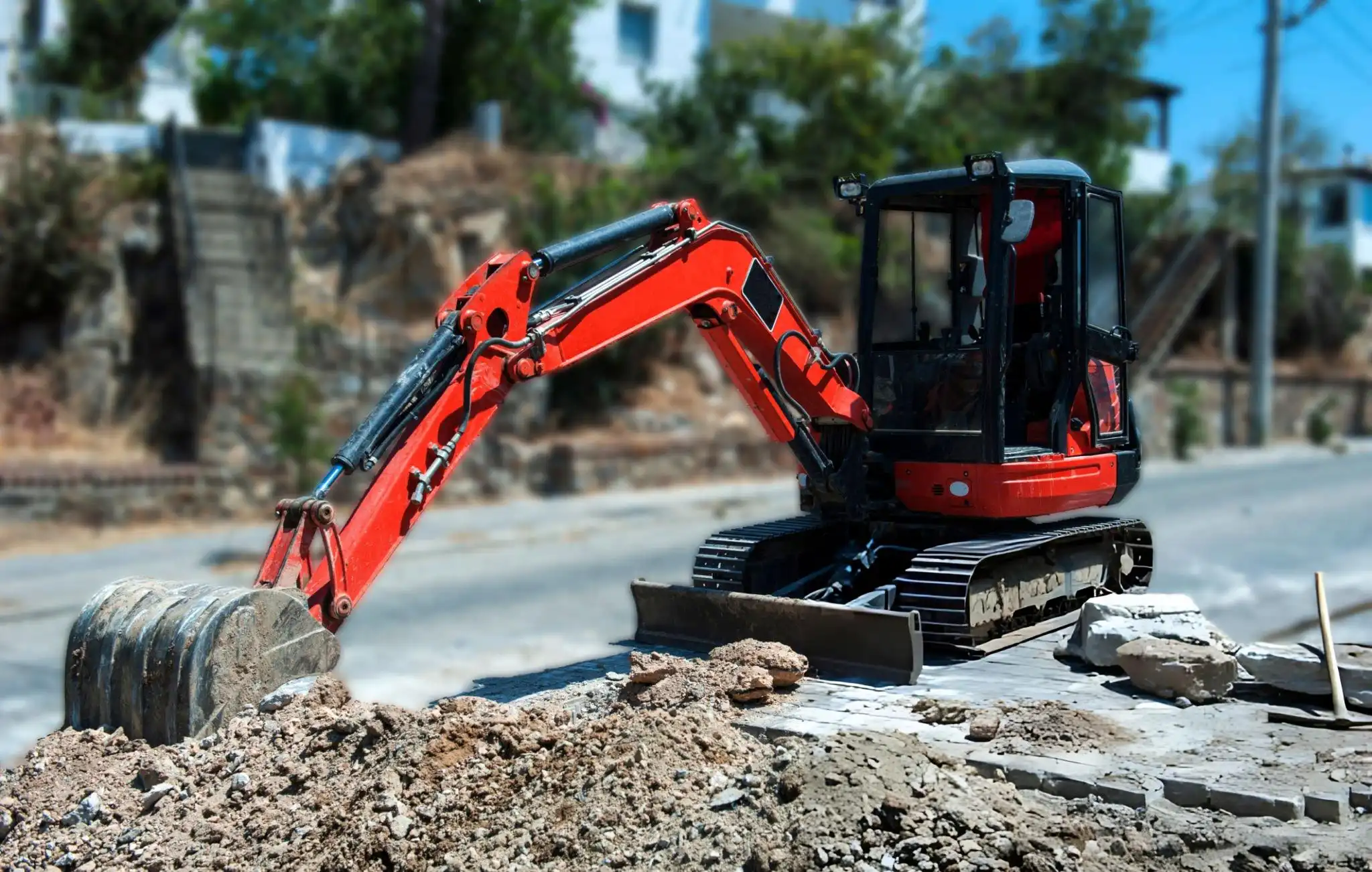
Mini excavators, often known as compact excavators, are a vital piece of machinery in construction work today. Mini excavators usually range from 2,000 to 22,000 pounds, weighing 1 to 11 tons. The main aim of these excavators is to provide a balanced and reasonable compromise between power, accuracy, and mobility.
This comprehensive analysis examines their technical specifications, real-world uses, performance features, strengths, weaknesses, and overall appropriateness for construction work. Based on facts and figures from reliable industry sources and manufacturers’ specifications, this analysis provides an informed evaluation.
Key Takeaways
Below are the key points explaining why mini excavators have become such an integral part of modern construction, focusing on their power, flexibility, efficiency, and the factors that affect their performance.
- Proper Power Output: Mini excavators provide sufficient horsepower output (10-70 hp), digging forces, and lifting capacity for residential, utility, landscaping, and light commercial construction in limited spaces.
- Flexibility and Efficiency: Flexibility is achieved through attachments, and mini excavators can be used in many ways, which increases efficiency by requiring fewer machines at the job site.
- Best Suited for Specific Scenarios: They are better suited for situations where maneuverability is important rather than sheer size, although they could be assisted by larger machines on bulkier projects.
- Economical and Sustainable: Their lower costs, easy transport, and even electrified variants make them cost-efficient and environmentally friendly choices.
- Human Factors: Proper training, following load charts, and maintenance will increase efficiency.
- Future Technologies: Continuous development of technologies in terms of electrification, hydraulics, and smart systems will make them even more efficient for the construction industry.
From the above information, it becomes clear that mini excavators have enough power and are actually the best solution in many cases.
Overview of Mini Excavator Classes and Features
Mini excavators are categorized based on the operating weight, which is an important criterion for capability. Different classes of mini excavators are produced by manufacturers depending on different requirements.
Engine and Hydraulic System
The Engine power differs greatly from one class to another. Small 1-2 ton excavators have 10-20 hp engines, which are appropriate for light-duty work. Medium-sized excavators weighing 3-6 tons have engines that produce 24-55 hp, offering good performance in construction.
Large compact excavators can even have 60-70 hp engines or above. The hydraulic system is an important feature of mini excavators, as it converts engine power into digging, lifting, and tool functions.
Digging Depth, Reach, and Breakout Force:
For smaller units, depth of digging usually varies from 5-8 feet, while in mid-size and larger units, it is 12-15+ feet. For example, most 3-5 ton excavators are capable of digging depths of 9-12 feet and have sufficient reach to efficiently move materials.
Bucket breakout forces can vary from 5,000 to 15,000 pounds or more, while arm digging force varies from 4-30 kN (900-6,700 lbf). This helps in handling soils, clays, gravels, and rocks.
Lifting Capacity and Stability:
Lifting capacity depends on parameters like boom length, positioning of the load, and machine design itself. For popular machines, lifting capacity may vary from 1,000 pounds up to more than 4,000 pounds when used with a dozer blade for stability.
However, manufacturers’ load charts should always be considered since capacity varies according to the distance from the center of rotation.
Other Performance Features:
Average travel speeds range from 2 to 4 miles per hour. The ground pressure is maintained low, thus minimizing surface damage to sensitive terrains such as lawns and paved roads. Tailswing choices available may be zero, restricted, or standard to accommodate work area limitations.
Many mini excavator designs are fitted with retractable undercarriages for easy maneuverability around tight spaces. Hybrid and electric mini excavators deliver high performance with zero emissions and minimal noise levels.
Mini excavators are designed differently from full-size excavators, which can have capacities between 10 and 90 tons or more and engines that produce 100 horsepower and above, with digging depths of more than 20 feet.
Primary Applications in Construction Environments
Mini excavators justify their effectiveness in several stages of construction work due to flexibility and focused power.
Residential Building and Renovation Projects:
For the construction of housing, such machines perform the functions of digging foundations, basements, laying utilities, and grading for new houses or extensions. Due to their small size, they can work in gardens or yards, which is inconvenient for other machinery.
Utility Installation and Infrastructure Maintenance:
The installation of trenches for pipelines (water, sewage), electricity cables, and drains is one of the main applications of mini excavators. With their high accuracy, they cause little harm to the surrounding area and minimize the amount of backfill material. They are used by municipal services for repairing existing streets or roads where traffic is restricted.
Commercial and Light Industrial Construction:
A mini excavator is an excellent choice for smaller commercial and light industrial construction sites where precision and maneuverability are paramount. Mini excavators are used for activities such as site preparation, footing installation, utility trenching, and grading. The machine’s size ensures efficient operation in limited spaces on construction sites.
Landscape Development and Design:
Mini excavators have many uses in landscaping construction projects. Mini excavators are very useful for building retaining walls, digging ponds, removing stumps, and preparing planting beds. Mini excavators are extremely versatile in all phases of landscape construction projects.
Demolition and Material Loading and Transport Work:
Hydraulic breakers and grapples enable mini excavators to undertake selective demolition jobs with minimal trouble. Mini excavators are capable of breaking concrete, demolishing small structures, and clearing away debris. Mini excavators also help load trucks with materials.
Construction Site Support Activities:
Mini excavators are extremely helpful in assisting large-scale construction sites where they carry out various finishing jobs that require precise operation. Mini excavators are ideal for working in tight spaces where large machines are incapable of reaching.
Also Read: Best Heavy-Duty Material Handling Equipment in 2026
Enhancing Capabilities Through Attachments and Accessories
One of the biggest advantages that can be found in mini excavators is the ability of the machines to be used with a variety of attachments. Basic digging buckets come in various widths depending on the type of soil and degree of precision required. Other attachments include:
- Hydraulic thumb attachments to hold on to awkward materials.
- Auger attachments for posts and piling.
- Breaker attachments for breaking concrete or rocks.
- Attachments for compacting soil.
- Rippers, Grapples, and Grading blades.
The above attachments are all hydraulically operated and enable an operator to go from one job to another almost immediately, thus increasing the efficiency and value for money of the machine.
Key Advantages for Construction Professionals
There are some advantages associated with mini excavators:
- Ability to Work in Confined Spaces: They can reach spaces that cannot be reached by bigger equipment, thus saving time in doing so manually.
- Cost-effectiveness: It is cost-effective due to low purchase cost, reduced fuel consumption, and less maintenance required.
- Less Environmental Damage: Low ground pressure makes sure no damage is done to the surrounding area.
- Portability: Most mini excavators are portable enough to move in a trailer attached to a pickup truck.
- Versatility in Usage: Mini excavators can be used at any stage of the construction project.
It has been found that these mini excavators help in making scheduling easier since tasks can be done simultaneously at multi-staged sites.
Limitations of Mini Excavators in Construction
Despite being very efficient in performing several operations, there are some limitations associated with mini excavators.
Where Full-Scale Heavy Duty Equipment is Needed:
- Large-scale excavation operations
- Material handling operations
- Heavy construction tasks
On such occasions, it is better to use full-scale equipment in construction. However, where normal operations are concerned, a mini excavator proves to be very efficient. It should also be noted that mini excavators perform poorly in cases where they are used in very deep excavations or heavy construction tasks where they are expected to provide maximum efficiency in large open spaces.
This problem can be solved by proper training and maintenance.
The Role of Operator Skill and Modern Technology
The machine’s performance is greatly influenced by the operator. The skillful operator ensures maximum hydraulic efficiency, balance, and choice of appropriate attachments. Some innovations incorporated into modern mini excavators are:
- Joystick controls and comfortable cabins that reduce exhaustion.
- Telemetric technology to measure use and schedule services and production.
- Engine and hydraulic management systems for better fuel efficiency.
- Greater visibility and improved safety standards.
Electric versions open new possibilities for noise- and emission-sensitive locations while providing sufficient power for daily construction needs.
Mini Excavator Selection Criteria for Construction Projects
The appropriate mini excavator must be chosen depending on the following essential selection criteria:
- Size of the project and space limitations.
- Excavation depth needed and type of lifts required.
- Number of times it will be used and ownership.
- Emissions and transportation rules applicable to the locality.
Three to six tons is the ideal range for mini excavators in general construction projects. Rentals are the best way to determine the ideal make and model. Trust Big Boss Machines for top brands and high-quality machinery for your construction projects.
Final Thoughts!
Mini excavators have enough power and capabilities for various construction applications. The combination of horsepower, hydraulic capabilities, digging capabilities, and maneuverability makes them efficient for residential, utility, landscaping, and light commercial applications. Although mini excavators cannot replace large excavators on large construction projects, they often offer better value overall thanks to their efficiency, access, and versatility.
With knowledge of specifications, matching machines to tasks, proper operator training, and the use of the right attachments, construction specialists can use mini excavators to increase efficiency, save money, and complete projects on time. As technology advances further, mini excavators are set to become even more valuable in the future of construction.
Frequently Asked Questions!
Yes. Mini excavators have an engine power of 10-70 hp, can dig up to 15 feet deep, have a good hydraulic system, and perform well in most construction situations, especially where space is limited.
Operating weight 2000-22,000 lbs, dig depth of 5-15+ feet, engine power 10-70 hp, and breakout force of several thousand pounds. The medium-size 3-6 ton machines are the most common.
Mini excavators are not as powerful as standard excavators since they have less horsepower and digging depth (over 100 hp and 20-foot dig), but they excel in maneuverability, cost-effectiveness, and performance in construction.
They are mostly used for utility trenching, foundation excavation, site grading, demolition, landscaping incorporation, and material handling.
Lease it when you are doing specific construction projects, whereas buy if you want to construct often because it will be more economical and you will customize your machine according to your construction requirements.