
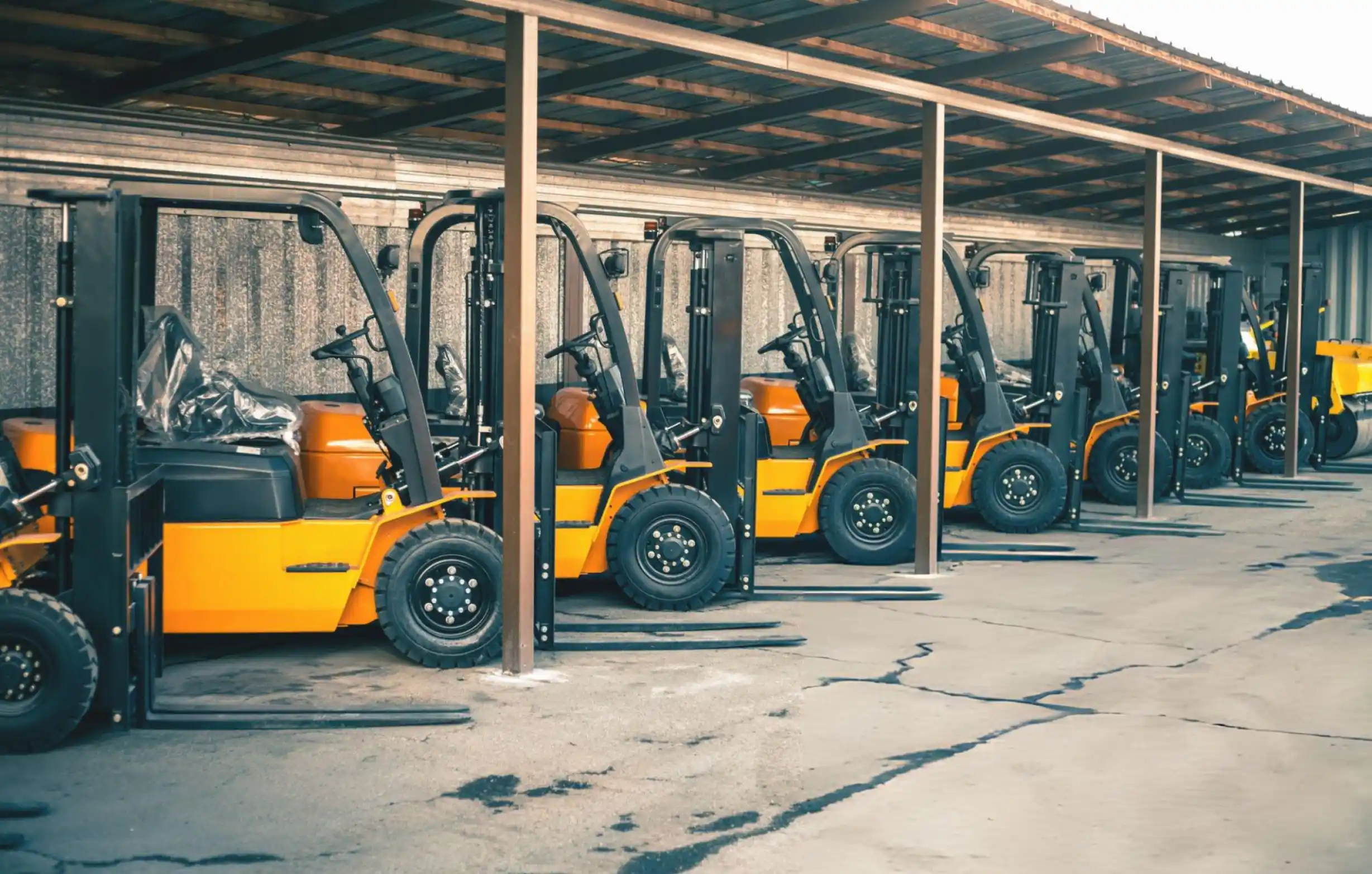
Purchasing a forklift is not only a big investment, but also a step that can change how you work, keep your workplace safe, and manage your expenses over time. If it is your first time buying a forklift or adding one to your fleet, the wrong decision can result in lower output, higher repair costs, and even workplace accidents.
This article will help you understand the major aspects you should pay attention to before buying a forklift, so that you can pick the right one that meets your operational requirements.
1. Figure out your operating environment
The place where the forklift will be used is the single most important factor influencing your decision to buy. This will determine what type of forklift you need for power and tires.
Indoor Vs. Outdoor Usage
When purchasing a forklift, it is important to select the appropriate type of equipment for your specific operating environment.
- If the forklift will be used indoors, it should be an electric one (Class I or Class II), as it is environmentally friendly and emission-free. The electric forklifts are the best choice when air quality matters, and thus they are widely used in food handling, warehousing, and manufacturing operations.
- The outdoor or mixed environments require internal combustion (IC) engine-powered forklifts (Class IV or Class V). Such forklifts use LPG, diesel, or gas and are better suited for off-road and long-duration operation than electric types.
Surface Conditions
Different floor and ground conditions directly impact tire performance, stability, and equipment longevity.
- Indoor smooth floors: Cushion tires give better stability and require less maintenance.
- Outdoor or rugged terrain: Pneumatic tires provide excellent traction and greater durability.
Forklift Usage Time
Monitor the forklift’s daily operating hours. Electric-powered forklifts suit short working times of 4-6 hours, whereas internal combustion engines can function continuously for 8+ hours.
2. Calculate Correct Load Capacity Needs
Always overestimate your load capacity requirements because selecting an underpowered forklift is extremely dangerous.
Load Weight
Common forklift capacities range from 3,000 to 6,000 lbs, with larger capacities up to 60,000 lbs. Your forklift must accommodate loads heavier than your heaviest load.
Important Note: Always maintain an additional 25% reserve capacity above your largest load weight. The reserve takes into consideration:
- Reductions in rated capacity from attachments
- Fluctuations in load weight
- Future load changes
Load Dimensions and Center
Most forklift capacities are based on the load center, usually 24 inches from the center of the fork face. Consider:
- Overall size of loads being lifted
- Length and width of loads
- Irregular shaped loads
Lift Height Requirements
Choose a forklift with the maximum lift height required. Important factors:
- Measure the tallest racking or storage system
- Important reminder: The taller the mast, the lower the lifting capacity
- Overhead clearance under doors or guards
3. Selecting an Appropriate Source of Power
Your choice of power source will determine operating costs, maintenance needs, and compliance with environmental standards.
Electric Lift Trucks
Electric forklifts are becoming increasingly popular due to their efficiency and environmentally friendly operation.
Benefits:
- No emissions (good for indoor use)
- Less costly maintenance
- Operate quietly
- Low long-term fuel costs
- Compliant with EPA standards automatically
Drawbacks:
- Batteries need replacement every 5-7 years
- Can operate only 4-6 hours between charges
- More expensive initially
- Needs charging facilities
Internal Combustion (IC) Engines
IC-powered forklifts offer strong performance and are well-suited for demanding outdoor applications.
LPG (Propane):
- Clean burn, suitable for indoors and outdoors mixed applications
- Ease of fuel changeover
- Lowest emissions compared to diesel
Diesel:
- Ideal for heavy outdoor work
- Highest torque in loading applications
- Lowest operating cost
- Highest emissions, noise, and maintenance costs
Gas (Petrol):
- Suitable for medium outdoor applications
- Lower torque compared to diesel
- Medium emissions
EPA Compliance Requirements
See whether your application requires EPA-compliant machines. IC engines should meet certain emission requirements based on location and type of operation.
4. Determine Suitable Tire Type
The selection of tires depends on your operating surface, influencing performance, ride quality, and maintenance costs.
Cushion Tires
These tires are commonly used in indoor environments where smooth surfaces allow optimal performance.
- Ideal For: Smooth interior concrete surfaces
- Strengths: Cheaper, lasts longer on smooth surfaces, improved stability
- Weaknesses: Limited traction on rugged or outdoor surfaces
Pneumatic Tires
Pneumatic tires provide enhanced traction and durability for challenging outdoor conditions.
- Ideal For: Outdoor and rugged terrain, gravel and asphalt surfaces
- Strengths: Excellent traction, absorbs shocks better, can handle debris
- Categories: Air-filled (conventional) and non-air-filled (solid) tires
Polyurethane Tires
Polyurethane tires are designed for specialized applications that require durability on smooth surfaces.
- Ideal For: Super-smooth interior surfaces and frequent operation
- Strengths: Extremely durable, no maintenance needed
- Weaknesses: More expensive, poor shock absorption
5. Necessary Attachments
Attachments increase your forklift’s versatility but affect capacity and budget planning.
Typical Attachments
Attachments can greatly improve forklift versatility by allowing it to handle a wider range of tasks.
- Side-shifters: Come standard on most contemporary forklifts and help with maneuvering
- Fork positioners: Help to adjust the fork width without any effort
- Clamps: Lift drums, cartons, or non-uniform objects
- Push-pulls: Handle loads that are placed on a slip sheet
- Bin dumpers: Unload loads from containers easily
- Single/double extensions: Lift longer loads
Impact on Capacity
Warning! Attachments reduce your forklift’s maximum capacity. Each attachment has a weight that must be deducted from the load capacity. Always check your forklift capacity with attachments installed before buying.
Compatibility
Make sure that your chosen forklift is compatible with the necessary attachments. Some models allow few attachments or may need a special hydraulic system.
6. Review Safety Features
Safety features on modern forklifts include measures designed to keep operators safe and to comply with OSHA standards.
Important Safety Features
Modern safety features help reduce workplace accidents and improve operator confidence.
- Seat belts: Essential for operator safety
- Speed control: Adjustable speed limits depending on the environment
- Backup alarms: Warn other workers when backing up
- Overhead guard: ANSI B56.1-certified overhead guard
- Fork leveling: Prevents accidental dropping of loads
- Lighting: LED work lights
- Cameras: Rear view and load area cameras
Advanced Safety Technologies
Innovative technologies provide an extra layer of protection for operators and surrounding personnel.
- Operator sensing device: Do not operate without an operator
- Stability controls: Automated load stability system
- Speed profiling: Multiple operating speeds in varying zones
- Emergency switch: Fast shutdown procedure
Forklift Safety Labeling Certifications
Check whether your forklift meets safety labeling requirements:
- UL approval (some forklifts are not UL approved)
- ANSI B56.1 overhead guard safety certification
- Manufacturer safety label
7. Service and Support Planning
Your forklift is an investment that will require maintenance throughout its lifetime.
Choices in a Maintenance Plan
Selecting the right maintenance plan can help minimize downtime and unexpected repair expenses.
- Regular scheduled preventive maintenance
- Covers regular inspection and repair of your lift
Less expensive than a comprehensive plan
A comprehensive maintenance plan provides broader coverage and helps businesses better manage unexpected repair costs.
- Breakdown and any repair costs covered
- Parts and labor included
- More costly initially, but a predictable expense
Availability of Local Support
Reliable local service support ensures faster repairs and better equipment uptime.
- Whether common parts are available locally
- Availability of certified technicians in your area
- The speed of service availability when equipment breaks down
- Whether the dealer has a good reputation
Warranty Coverage
Carefully reviewing warranty terms can protect your investment and reduce future costs.
- How long the warranty lasts (usually 1-3 years for new equipment)
- What is included under warranty (components)
- Whether labor is included in the warranty
- Warranty transferability when selling the equipment
8. Calculate Total Cost of Ownership
The mistake of looking only at purchase prices is very costly indeed. Look at lifetime value.
Upfront Costs
The initial purchase price is only one part of the overall forklift investment.
- Purchase price ($15,000 – $60,000 and above for new and $5,000 – $30,000 for used)
- Delivery and installation
- Initial attachments purchase
- Training
Operating Costs
Day-to-day operating expenses can significantly impact the long-term affordability of a forklift.
Electric
- Electricity: $0.05 – $0.15 per hour
- Battery replacement $3,000 – $8,000 every 5 – 7 years
- Lower maintenance cost: $0.50 – $1.00 per hour
IC Engines
- Fuel: $1.50 – $3.00 per hour, depending on fuel
- Higher maintenance cost: $1.50 – $3.00 per hour
- Engine repair: $2,000 – $10,000 and more over the lifetime
Additional Costs
- Employee training (as per OSHA requirements)
- Modifications in the facility (charging facilities, fuel storage)
Insurance premiums
- Requirement of storage space
- Downtimes while repairing
Alternative Financing
Flexible financing options can make acquiring a forklift more manageable for businesses of all sizes.
- Leasing: Reduced initial expense, predictable monthly payments
- Renting: Try before you buy, good for temporary usage
- Second-hand equipment: Reduced cost, increased maintenance risk
9. Try Before You Buy
Make sure you never buy a forklift before testing it in your own working conditions.
Demo Requirements
Testing a forklift before purchase helps confirm whether it suits your operational needs.
- Comfort of operation and ergonomics
- Loading efficiency with your loads
- Maneuvering in your aisles and areas
- Fit into your processes
Test Drive Checklist
Use this checklist during your demo to thoroughly evaluate real-world performance and suitability.
- Raise and lower loads with ease
- Handle tight turns and aisles
- Test brakes
- Operate all controls and attachments
- Visibility with loads
- Cycle time tests
10. New versus Used Forklifts/Leasing
The decision you make will influence the cost and the life expectancy.
New Forklifts
New forklifts offer the latest features and reliability but typically come at a higher cost.
Pros:
- Latest technologies and safety features
- Warranty
- No wear and tear whatsoever
- Maintenance is predictable
- Has a long life expectancy (more than 10 years)
Cons:
- Most expensive
- Depreciation is instant
Used Forklifts
Used forklifts can provide substantial savings when purchased from a trusted source.
Pros:
- Cheaper compared to new forklifts (between 30% and 50% cheaper)
- Slow depreciation
- Available immediately
Cons:
- History of maintenance unknown
- Has fewer years to live
- There could be concealed damage
- No warranty
- High maintenance cost
Leasing a Forklift
Leasing offers flexibility and can reduce the financial burden of equipment acquisition.
Leasing a New Forklift:
- Modern equipment with a warranty
- Monthly payment
- Tax advantages
Leasing a Used Forklift:
- Less costly monthly payment
- Can try before buying one
- Room for upgrade
Brand Loyalty Question
Using the same brand for all vehicles makes switching easier (provided you have proper training) and simplifies vehicle maintenance. However, avoid sticking with a brand if another brand can be more beneficial to your needs.
11. Mandatory OSHA compliance
OSHA requires certification for the operator if the operator uses a forklift. This training is mandatory.
Training Requirements
Proper operator training is essential for workplace safety and regulatory compliance.
- First-time certification before use
- Refresher training every three years
- Training if the operator is considered unsafe
- Training tailored to your forklift model and workplace
Training Cost
Training expenses should be included in the total cost of owning and operating a forklift.
- Initial training: $500-$1500 per operator
- Continuous refresher training
- Record-keeping system
12. Time for Purchasing
Purchase timing may affect price and availability.
Market Conditions to Watch For
External market factors can influence both equipment availability and pricing.
- Supply chain-related issues: May influence availability and prices due to delays
- Market conditions: Influence prices according to demand
- Government policy: Regulations on emissions, tax benefits for electric vehicles
- Seasonality: Prices increase during high construction periods
Right Time to Buy Indicators
Recognizing the right time to invest can help maximize value and operational efficiency.
- Current equipment is approaching 7-8 years of age (end of useful life)
- Maintenance cost is over 10% of the equipment price per year
- There is better technology in terms of efficiency
- Tax benefits and grants are offered for certain types of equipment (electric)
Why Choose Big Boss Machines
Big Boss Machines is an eminent supplier of high-quality heavy machinery, including forklifts and other equipment, for the construction, logistics, mining, and industrial sectors in the UAE.
Main advantages include:
- Extensive Range of Machines: New and pre-owned machinery is available from their stock, thoroughly checked and serviced before sale to withstand the demands of the UAE climate.
- Emphasis on Quality: They inspect and test all machines for performance before sales in order to guarantee high quality.
- Expertise: Having experience in supplying machinery to builders, contractors, developers, and other governmental agencies of the UAE, they are aware of regional difficulties such as extreme weather, dust, and port/logistics needs.
- Service-Oriented Approach: In addition to sales, they prioritize after-sales service, the provision of spares, and the supply of machinery that operates effectively and safely.
- One-Stop Solution: They offer a range of heavy vehicles and forklifts, along with other construction machinery.
Collaboration with Big Boss Machines will help you minimize risks and make your forklift investment profitable in the UAE market.
Final Thoughts!
Choosing the right forklift is an intricate process that takes into account many factors, such as lifting capacity, operating environment, power source, safety, and cost. Proper analysis of needs and concentration on the total value will help to avoid costly errors. By working with a reputable supplier like Big Boss Machines in the context of the highly competitive logistics and construction industry in the UAE, you will have access to the best possible heavy machinery and assistance. Spend enough time and effort on analysis and testing, and consult experts before making an informed choice.
Frequently Asked Questions!
You must match the specifications of your forklift, such as its lifting ability and power source, exactly to your needs. Any mismatch could prove to be dangerous or cost-ineffective.
You should purchase a new forklift if your operations require high utilization or the latest forklift technology. But if you are on a budget, second-hand is your best choice if it has been thoroughly checked by a professional.
Electric models will give you low operational costs and no harmful fumes and noise. They are very quiet, which makes them suitable for a warehouse environment.
Maintenance costs depend on frequency and type of use and may start from a couple of thousand USD up. Maintenance according to the schedule considerably helps to avoid unforeseen repair expenses. Services within the UAE make the costs reasonable.
Pay attention to safety functions such as stability control, operator detection systems, visibility improvements, and UAE HSE/RTA standards. Also, licensing and operator training will provide an additional layer of security.