
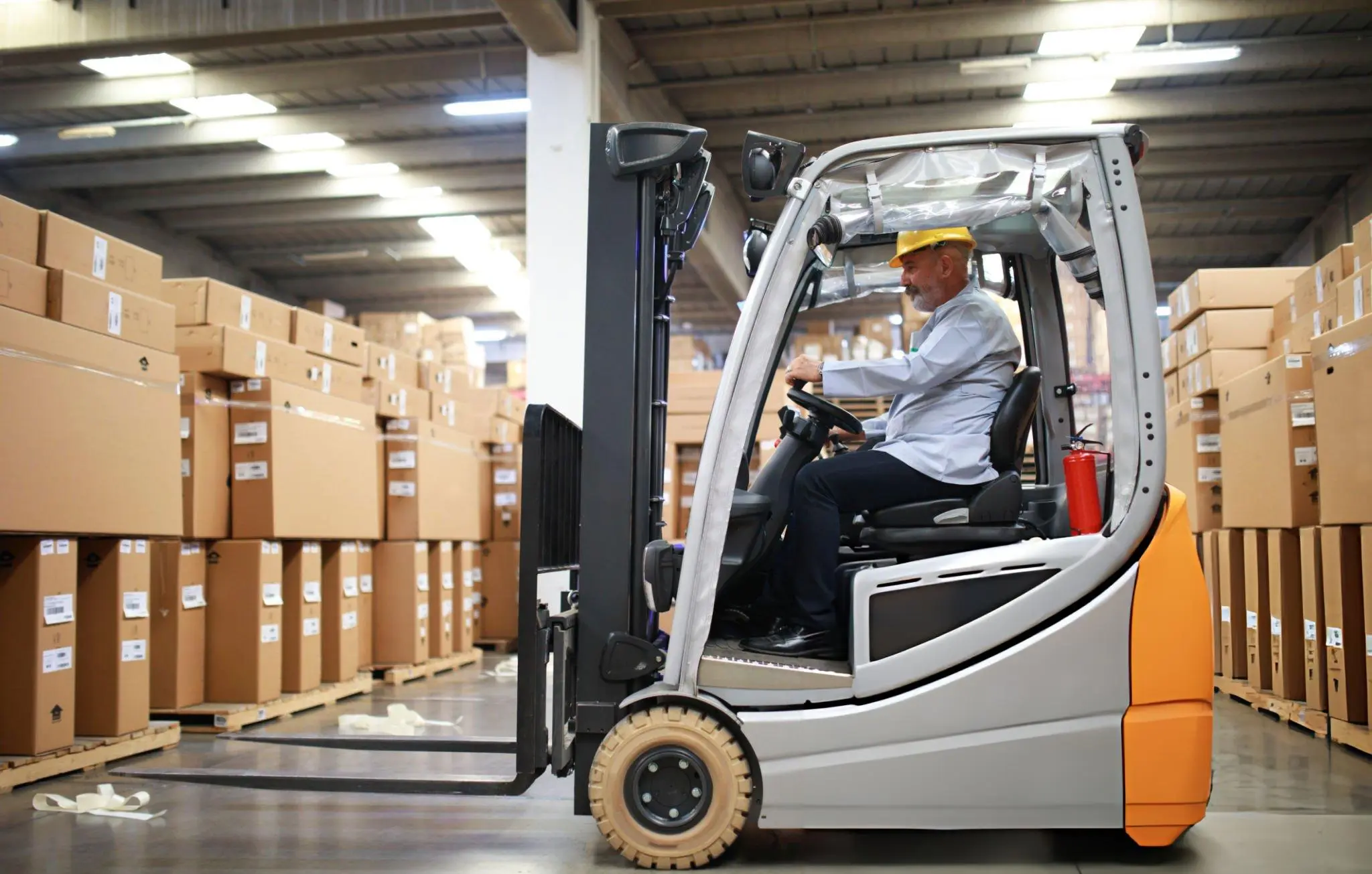
There have been tremendous transformations in the forklift industry over the past ten years. Due to companies’ efforts to increase efficiency, reduce operational costs, and meet environmental standards, electric forklifts have been identified as one of the biggest innovations in materials-handling equipment. Many warehouses, manufacturing plants, logistics companies, retail distribution centers, and port operators are switching to electric machinery to upgrade their processes.
But one significant question remains unanswered: Can electric forklifts fully replace conventional internal combustion forklifts?
The issue cannot be answered with a simplistic yes-or-no statement. Although electric forklifts have become much more powerful, technologically sophisticated, and economical, the dominant position of traditional diesel and liquefied petroleum gas (LPG) forklifts persists in some hard-to-reach areas where high performance, durability, and outdoor suitability are crucial.
In this thorough guide, we will examine the pros and cons of electric forklifts, the latest technological advances, the range of applications, and the future of the forklift industry.
Difference Between Electric Forklifts and Traditional Forklifts
It is important to know how each type of machinery functions before comparison.
Electric Forklifts
For electric forklifts, energy is provided by rechargeable batteries (lithium-ion or lead-acid) that power the electric motors. Such forklifts do not emit, operate quietly, and have fewer moving parts than combustion-powered forklifts.
Examples of popular models currently in use include the Socma FB16 Electric Forklift, Socma FB18N Three Wheel Electric Forklift, Socma FB20N Three Wheel Electric Forklift, Socma FB30 Electric Forklift, Socma FB35 Electric Forklift, Socma FB40 Electric Forklift, and the heavy-duty Socma FB50 Electric Forklift.
These forklifts are commonly used in:
- Warehouses
- Cold storages
- Food processing factories
- Pharmaceutical industry
- Distribution centers
- Indoor manufacturing facilities
Traditional Forklifts
Traditional forklifts use internal combustion engines that operate on diesel, LPG, or petrol. The engines offer powerful lifting capabilities and extended working periods and are best suited for heavy-duty operations in outdoor environments. Nevertheless, they emit exhaust gases and noise pollution and require regular maintenance due to their complex mechanical systems. The engines in these forklifts deliver high sustained power output and are better suited to tough outdoor settings.
These are common in:
- Construction sites
- Ports
- Mining
- Steel industries
- Lumber yards
- Heavier manufacturing facilities
Why Are Electric Forklifts Becoming More Popular?
There have been developments that have enabled electric forklifts to compete with diesel-powered models on equal footing.
1. Environmental Sustainability
Among the top reasons that businesses are opting for electric forklifts is their sustainability.
Electric forklifts:
- Are zero-emissions vehicles, while functioning
- Decrease pollution in the workplace
- Allow companies to comply with environmental legislation
- Contribute to carbon reduction plans
Most nations are urging businesses to lower their use of fossil fuels.
2. Quieter Performance
There is growing awareness of noise pollution in industry.
Electric forklifts generate less noise when compared to diesel engines and provide:
- Good worker communication
- Decreased operator fatigue
- Worker comfort
- No noise complaints
Thus, these forklifts are perfect for use inside and in areas that have noise restrictions.
3. Energy Efficiency
Electric motors achieve higher energy conversion efficiency than combustion engines.
There are various advantages, including:
- Higher energy utilization
- Energy saving
- Decreased operational costs
- Higher efficiency levels
A regenerative braking system increases energy efficiency by recovering energy during deceleration.
4. Increased Energy Efficiency
Electric motors are more efficient because they use less energy than combustion engines.
Advantages include:
- Increased energy use
- Decreased energy loss
- Decreased cost of operations
- Increased efficiency
Regenerative braking increases energy efficiency by capturing energy as the vehicle slows.
5. Better User Comfort
Contemporary electric forklift trucks provide smooth operation and better ergonomics.
For operators, this means:
- Immediate torque generation
- Reduced vibrations
- Comfortable seats
- Computerized displays
- Better visibility
- Less warm temperature inside
Such characteristics help users to be more productive on the job.
How Battery Technology Has Altered the Game
The fast development of lithium-ion batteries has made the electric forklifts more competitive.
Lead-Acid Batteries
Old-fashioned electric forklifts used lead-acid batteries, which needed:
- Refilling with water
- A long time to charge
- A dedicated room to charge
- Maintenance
They are still common because of their lower price, but are being gradually replaced.
Lithium-Ion Batteries
Lithium-ion batteries have changed the world of electric forklifts. Some of the benefits are:
- Rapid charging
- Recharging opportunities during breaks
- A longer lifetime
- No need for maintenance
- Increased energy efficiency
- A stable performance
Many factories use different shifts for lithium-ion electric forklifts without changing the battery.
When Electric Forklifts Do Better
There are instances where electric forklifts perform better than conventional ones.
Indoor Warehouse Settings
Indoor settings need clean and noiseless machines. Electric forklifts do not produce any harmful exhaust, making them more suited for indoor use.
Food & Beverage Industry
Regulations for the food industry require clean environments free of contaminants.
Electric forklifts prevent the following from happening:
- Odors of fuel
- Any exhaust contaminants
- Oil leakage from combustion engines
Pharmaceutical Industries
Manufacturing pharmaceuticals requires very high cleanliness standards.
Electric forklifts will help to achieve:
- Clean environment
- Controlled air quality
- Noiseless environment
E-commerce Fulfillment Centers
The large fulfillment warehouses work around the clock.
Electric forklifts help to:
- Improve picking efficiency
- Ensure worker comfort
- Save energy
- Automate warehousing
Cold Storage Warehouses
Electric forklifts work very well in cold storage warehouses because they do not emit combustion fumes in the enclosed cold environment.
Industries Where Traditional Forklifts Still Rule
Although electric forklift technology is commendable, it has not yet fully replaced traditional forklifts. There are certain tough requirements that only combustion-powered vehicles meet.
Heavy Outdoor Construction
Some of the tough requirements of outdoor construction sites include:
- Mud
- Tough terrain
- Extended operating hours
- Heavy lifting
In such conditions, diesel-powered forklifts usually tend to work better.
Ports and Shipping Terminals
The ports need forklifts that can handle continuous heavy cargo loads throughout the day. Traditional forklifts have the advantages of:
- Fast refueling
- High lifting capacity
- Outdoor capability
Mining Operations
The traditional mining workplace includes:
- High temperatures
- Tough terrain
- Dust
- Continuous hard work
Diesel-fueled machines will be more practical in such conditions.
Remote Workplaces
Several remote industrial workplaces lack adequate electrical infrastructure for charging. Fuel-powered forklifts may continue operating with portable fuel, making them more practical in remote areas
Performance Comparison: Electric Forklifts versus Traditional Forklifts
To get a complete picture of which forklift technology wins in practical application, a side-by-side analysis is required. Although electric forklifts have been catching up fast in performance, there are some instances where the traditional forklift still takes the lead. Here is a comparative analysis based on important parameters:
| Feature | Electric Forklift | Traditional Forklift |
| Emissions | Zero tailpipe emissions | Produces exhaust gases |
| Noise | Very quiet | Louder engine noise |
| Maintenance | Low | Higher |
| Fuel Cost | Lower | Higher |
| Charging/Refueling | Requires charging | Quick refueling |
| Indoor Use | Excellent | Limited (ventilation required) |
| Outdoor Use | Good (modern models) | Excellent |
| Heavy Loads | Improving rapidly | Excellent |
| Operating Hours | Battery dependent | Continuous with refueling |
| Initial Cost | Higher | Often lower |
The above comparison explains why many warehouses are shifting from conventional forklift trucks to electric trucks for all their work, except in situations where conventional trucks are needed for heavy-duty work.
The Rise of Smart Electric Forklifts
Present-day electric forklifts are no longer mere lifting tools. In today’s world, there have been advancements like:
- IoT connectivity
- Forklift management software
- GPS
- Telematics
- Collision prevention
- Driver authentication
- Predictive maintenance
- Battery condition tracking
All these additions allow businesses to make full use of equipment and minimize unexpected downtime.
Safety Features of Electric Forklifts
Electric forklifts are also far safer. Today’s electric forklifts come equipped with:
- Automated speed control
- Anti-tip system
- Stability control
- Regenerative braking
- Load sensing
- Cameras
- Pedestrian sensors
The low center of gravity ensured by the battery packs also increases the machine’s stability.
Challenges Preventing Complete Replacement
While there have been improvements in electric forklifts, certain difficulties are yet to be overcome.
High Initial Investment
Electric forklifts powered by lithium-ion batteries can be more expensive than diesel-powered ones. Such an issue might dissuade small businesses because of the upfront capital cost, although they may prove cheaper overall.
Charging Infrastructure
If firms decide to switch to electric forklifts, they will require:
- Charging stations
- Electrical installations
- Battery management systems
- Power backup systems
This infrastructure requires additional planning and investment.
Charging Duration of Batteries
Despite advancements in fast-charging technology, charging takes considerably longer than refueling a diesel forklift. Tasks that demand operation 24/7 would require:
- Several batteries
- Opportunity charging
- More forklifts
Weather Extremes
Battery and charging efficiency can be negatively impacted by extreme heat or cold. In general, diesel-powered forklifts tend to perform more consistently than electric ones in extreme outdoor conditions.
Industries That Have Adopted Electric Forklifts In Large Numbers
Several industries have increased their purchases and use of electric forklifts. Industries that have done so are:
- Retail distribution
- Third-party logistics
- E-commerce
- Pharmaceutical
- Food processing
- Beverages production
- Electronics
- Automobile manufacturing
- Cold Storage
- Consumer goods manufacturing
These sectors emphasize a clean working environment and emissions control.
Will Battery Technology Continue Improving?
The future appears bright for electric forklift development. Scientists and experts keep working on batteries with:
- High energy density
- Quick recharge
- High durability
- Enhanced safety
- Low production cost
The use of solid-state batteries can deliver even higher efficiency, making electric forklifts applicable for more challenging applications.
Government Policies Support the Transition
Governments around the world try to promote the change by:
- Implementing emission restrictions
- Introducing sustainability targets
- Creating incentive schemes
- Encouraging green manufacturing
- Requiring corporate ESG
It is expected that these efforts will result in increased global use of electric forklifts over the next decade.
Why Trust Big Boss Machines for Heavy Machinery?
While purchasing either electric or conventional forklifts, it is also necessary to choose a reliable supplier who can help to select the right machine. Big Boss Machines company has several advantages when it comes to buying forklift trucks for companies in the UAE and abroad:
- Competent Choice of Equipment: The company does not just sell machines; it helps you choose the forklift truck suitable for your site conditions, load-lifting intensity, and requirements.
- High Quality and Performance of Forklifts: All Socma forklifts (Socma FB16N, Socma FB20, Socma FB50, and Socma MQ series) have been selected for their excellent performance and modern specifications.
- Technical Consulting and Assistance: Technical consulting, application engineering, commissioning, preventive maintenance planning, and equipment optimization.
- Good After-Sales Assistance: Reliable spare parts supply, technical assistance, and maintenance services.
- Approach to Customers: They have their office in Dubai and provide personalized consultation services and tailor-made solutions for the warehouse, logistics, and manufacturing industries, as well as other sectors.
- Machinery for Value Over Time: They emphasize machinery that offers good value over time because it performs well for many years under heavy use.
No matter whether you need a small 3-wheeled forklift for indoor purposes or an all-directional forklift, Big Boss Machines guarantees you the best machines.
Can Electric Forklifts Fully Replace Diesel and LPG Models?
It all depends on the task at hand.
In the indoor warehousing, logistics, manufacturing, retail, pharmaceutical, and food processing industries, as well as in e-commerce, electric forklifts are ready to replace traditional ones in many cases. Their advantages in terms of lower cost, quietness, absence of emissions, and sophisticated technologies make them preferable in these environments.
On the other hand, there are hard outdoor industries such as construction, mining, port operations, lumber yards, and other industrial facilities that still rely on diesel and LPG forklifts. Such industries require continuous work, quick fueling, and constant efficiency in any working environment.
In general, it is not about the substitution of one technology for another but about the coexistence of two technologies within the fleet.
Future Outlook
The coming decade will see one of the biggest transformations to ever happen in the material handling industry. There will be development in the following spheres:
- Lithium-ion batteries
- Solid-state batteries
- Artificial Intelligence
- Automated Forklifts
- Fleet Management Software
- Smart Charging Systems
This will continue to narrow the efficiency gap between electric and conventional forklifts. Many players have already invested heavily in electric forklifts, and upcoming innovations may enable them to carry out most industrial tasks in the future.
Although there is no full-scale replacement yet, it is clear that electric forklifts are set to dominate material handling in the future.
Final Thoughts!
Today, electric forklift trucks are no longer considered suitable for light indoor operations in warehouses. Their high performance, low operating and maintenance costs, and environmentally safe operation are made possible by the rapid development of battery technology, intelligent fleet management, and energy-saving design solutions. In many indoor industrial sectors, such as forklifts have already become the preferred equipment and are rapidly replacing traditional diesel and LPG forklift trucks.
Nevertheless, full-scale replacement of conventional forklift trucks will still take some time. There are heavy-duty and outdoor operations, multiple shifts without access to charging facilities, and remote operations that cannot be performed by electric forklift trucks because of their endurance and quick refueling. It remains to be seen how quickly the situation changes in light of further developments in battery technology and charging infrastructure.
Frequently Asked Questions!
Electric forklifts can replace diesel forklifts in most indoor applications, such as warehousing, manufacturing plants, and distribution centers. Still, diesel forklifts are better suited for heavy outdoor operations, rough terrain, and continuous high-load applications.
In fact. Electric forklifts usually have lower running costs because they use electricity rather than fuel, require less maintenance, and have fewer mechanical components subject to wear and tear, resulting in lower service costs over time.
Lead-acid batteries used in electric forklifts usually last for about 1,2001,500 charging cycles, whereas with good upkeep, lithium-ion batteries can reach well over 3,000 charging cycles. Usage, charging habits, and operating conditions determine the real lifespan.
Warehousing, e-commerce, food processing, pharmaceutical retail distribution, cold storage, automotive assembly, and electronics are sectors that rely heavily on electric forklifts for their low-emission, quiet operation, and energy efficiency.
Companies that primarily operate indoors, or those looking to lower their operating costs and carbon emissions, will find buying electric forklifts in 2026 a viable long-term investment. Firms with challenging outdoor operations might find it beneficial to maintain a mix of electric and traditional forklifts to maximize productivity.