
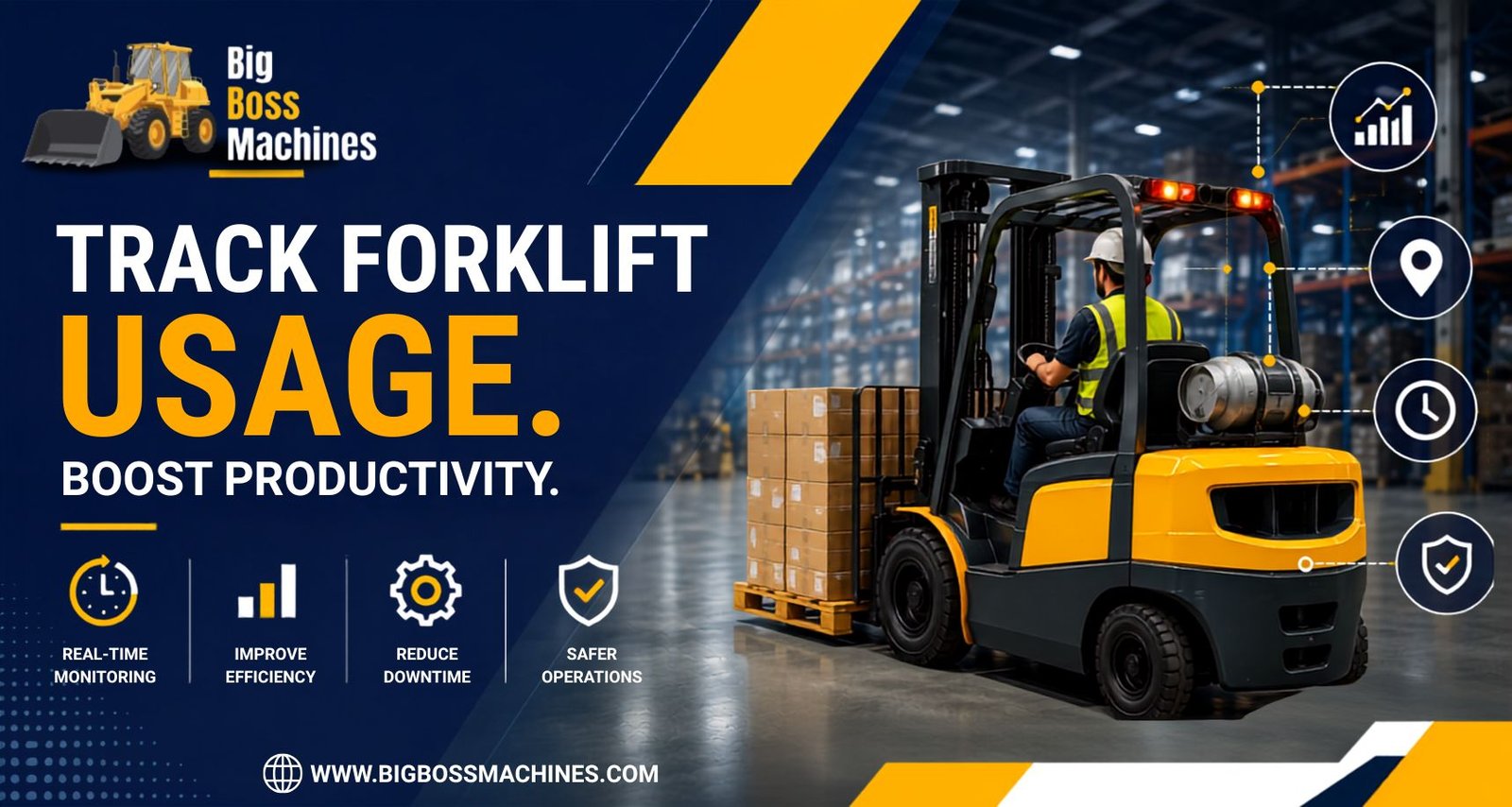
Forklifts don’t just move pallets; they move an entire warehouse. However, without understanding when, where, and how forklifts operate, it’s hard to identify waste of time, money, and resources.
More warehouses now use forklift tracking systems to measure equipment productivity. An appropriate forklift tracking system can help businesses improve equipment efficiency and streamline operations, whether you’re managing an existing fleet or evaluating forklifts for sale for your warehouse.
Below are five approaches to tracking forklifts and improving warehouse productivity.
Key Takeaways
Forklift fleet management becomes efficient when you understand how the machines are operated in reality. The more detailed you track equipment usage in the warehouse, the more opportunities you have to identify operational problems and opportunities for improvement.
Here are some critical tips that will help you:
- Track operating and idle time to use equipment effectively.
- Use telematics to gather more information about machine usage and performance.
- Track travel routes and cycles for minimizing unnecessary movements.
- Connect equipment-related data with warehouse management data to optimize tasks.
- Watch critical KPIs and turn usage reports into operational improvements.
- Utilize historical data for making decisions about equipment maintenance and purchases.
Why Forklift Usage Tracking Matters
Forklifts often run for an entire shift in the warehouse, making them central to material handling. However, constant use doesn’t mean the machine operates effectively.
Monitoring forklifts helps managers understand the equipment’s condition and how to improve its operation.
- Decrease downtime: Identify times when a forklift is active but not productive.
- Increase efficiency: Learn which forklifts are frequently utilized and which are rarely used.
- Plan service: Use operating hours to schedule maintenance before a small problem becomes an expensive breakdown.
- Increase operator productivity: Analyze movement and work processes to identify bottlenecks.
- Reduce operating costs: Better monitoring of forklift activities can decrease costs associated with fuel, energy, tires, and servicing.
1. Monitor Forklift Hours and Engine Runtime
The first way to measure forklift productivity is to track operating time and engine hours. Hour meters and telematics solutions give managers key information on runtime, operating hours, and activities.
Instead of guessing, managers can calculate real usage data to identify which forklifts have higher operating hours and which operate inefficiently.
- Monitor hours of operation: Record operating hours daily, weekly, and monthly.
- Compare forklifts: Find those forklifts that work too much, whereas some other forklifts do not operate for long periods of time.
- Register hours of idling: Calculate active forklift operating hours to see unused runtime that wastes energy and fuel.
- Use data in maintenance: Schedule maintenance based on actual operating hours, not just dates.
- Improve renewal planning: Realistic hour data can show managers when to refit or replace the forklift.
For instance, if a particular forklift has significantly more operating hours than similar ones in the same warehouse, you can look into why it works so hard.
2. Use Telematics to Track Real-Time Activity
While an hour meter provides only total operating time, telematics can provide much more detail. Connected fleet management systems can capture information on machine location, movement, operating hours, impacts, and other performance measures.
This provides a more complete picture of what happens during a warehouse shift.
- Track machine location: See where forklifts tend to spend most of their time and identify unnecessary movement.
- Monitor operating behavior: With the right systems, managers can analyze operating speed, braking, and other factors.
- Detect impacts: Impact detection sensors can show whether accidents or impacts occurred that might have damaged machines, products, or the warehouse itself.
- Analyze equipment usage: Compare hours when equipment was actively used, idle, or not used at all.
- Access centralized data: Access information from different forklifts through one digital platform.
What makes the difference is visibility. Instead of guessing the causes of low productivity, managers can analyze equipment data.
3. Record Forklift Travel Routes and Task Cycles
Your forklift likely spends a lot of time traveling without a load. This can stem from long routes, poor inventory placement, aisle congestion, and inefficient picking processes.
Forklift route tracking will help you identify factors that reduce productivity.
First, consider how forklifts move from receiving areas to storage and picking zones to loading docks. Next, see which routes get repeated and could be improved.
- Identify unnecessary travel: Consider routes where forklifts travel long distances while not carrying any material.
- Identify repeated trips: Frequent trips to the same place show inefficiency in inventory placement or task management.
- Decrease unnecessary travel: Adjust your workflow to reduce forklifts’ travel distances without a load.
- Consider warehouse layout: Use movement data to see which high-turnover inventory should be moved closer to the work area.
- Measure cycle times: Determine the time it takes to complete the most typical tasks: for example, picking and transporting the pallet.
Even a slight decrease in travel distance makes a big difference when multiplied by the hundreds of trips made every day.
4. Connect Forklift Data With Warehouse Management Systems
Equipment becomes even more effective when you combine forklift usage data with warehouse operational data. Integrating forklift tracking with warehouse management systems (WMS) gives you a more complete picture of productivity.
Instead of focusing only on forklift utilization, you can consider the relationship between equipment movement and warehouse operations.
- Assign equipment by workload: Use equipment based on current demand instead of a fixed schedule.
- Pinpoint bottleneck operations: Compare forklift availability with the number of orders to spot potential problems.
- Allocate tasks effectively: Use workload information to assign jobs to available equipment.
- Coordinate warehouse activities: Synchronize forklift movements with the receipt, picking, replenishment, and shipment schedules.
- Measure productivity: Compare forklift utilization with the number of completed warehouse tasks.
Thus, the analysis shifts from simply measuring forklift operation duration to measuring how productive the machine was.
5. Create Forklift Performance Reports and KPIs
Data collection alone is not enough. To increase warehouse productivity, organizations must turn that data into actionable performance indicators.
Forklift performance reports can give managers insight into trends, help them compare equipment, and support informed decisions about its use. Metrics must reflect actual equipment operation and warehouse productivity.
- Utilization rate: Measure the percentage of productive usage out of total available time.
- Idle time: Record unnecessary idle times when equipment operates but does not perform any productive work.
- Operating hours: Compare equipment usage to identify workload differences.
- Travel time: Record the time spent traveling from one location to another.
- Task cycle time: Measure the speed at which standard material handling operations are performed.
- Maintenance frequency: Record equipment service needs and maintenance issues.
- Impact events: Review impact collisions to identify safety issues and training needs.
Managers can review these KPIs weekly or monthly and act on the results. Equipment with a low utilization rate doesn’t need to be replaced; it should be reassigned.
How Better Forklift Tracking Improves Warehouse Productivity
Data collection alone does not help businesses achieve anything. Applying that data to daily operations makes tracking worthwhile.
By combining operational insights with usage data, businesses can increase productivity in several ways.
Optimizing Forklift Fleet Usage
With a clear picture of which forklifts are utilized and which are not, managers can better allocate workload within the fleet, without necessarily increasing its size.
Reduced Operating Expenses
Monitoring idle time, unnecessary travel, and excessive operation can reduce fuel and energy consumption and wear from unnecessary use.
Enhanced Maintenance Operations
Performance data provides a strong basis for forklift maintenance. By servicing equipment properly, managers can reduce the risk of unscheduled downtime and extend its lifespan.
Improved Warehouse Flow
By analyzing route and cycle times, managers can optimize storage layout and material movement to ensure smoother warehouse flow.
More Informed Equipment Decisions
With long-term forklift utilization data, managers can make better decisions about purchasing, renting, replacing, and redistributing equipment.
Why Choose Big Boss Machines for Forklifts?
Forklifts can help speed up, smoothen and facilitate warehouse operations. Big Boss Machines provides different material handling equipment depending on specific warehouse and industrial needs.
- A wide variety of forklifts: Discover dependable forklifts for sale for various lifting, loading, and material handling tasks.
- More efficient forklifts: Companies seeking quieter, more environmentally friendly forklift options may consider electric forklifts for sale for indoor operations.
- Smart product-based decisions: Choose from the available forklift options according to your business operations.
- Better forklift fleet management: Find the proper equipment and track its use.
Explore Forklifts at Big Boss Machines and find equipment that fits your warehouse’s material-handling needs.
Final Thoughts!
An efficient warehouse does not have to be the one with the most forklifts. Rather, it is the one that makes the best use of the equipment it already possesses—or chooses the right forklifts for sale to meet its operational needs.
By analyzing variables such as forklift usage, operating time, movement, task cycles, and performance metrics, warehouse managers can spot inefficiencies that might otherwise go unnoticed. This can lead to better equipment utilization, reduced costs, improved material handling, and better fleet decision-making.
Whatever your warehouse – big or small – forklift tracking can help you turn the normal operation of the equipment into knowledge that keeps your productivity on the right path.
Frequently Asked Questions!
You can measure forklift utilization in several ways, such as hour meters, telematics, fleet management software, GPS, impact sensors, and WMS data.
Measuring forklift utilization helps you understand equipment use, detect idle time, schedule maintenance, manage operating costs, and optimize warehouse processes. It also provides valuable information for future fleet planning.
Key forklift KPIs include operating hours, idle time, utilization rate, travel time, task cycle time, maintenance frequency, energy/fuel consumption, and impact events. The most effective KPIs are those that are directly related to productivity and operating costs.
Yes. It helps managers identify overuse, inefficiency, maintenance issues, and other problems that can drive higher fuel consumption and unnecessary costs. This data can also help when evaluating forklifts for sale for future fleet requirements.
Forklift telematics is a technology used to gather information on machine usage and condition. The information gathered depends on the specific telematics system. It can also help businesses compare different equipment options, including electric forklifts for sale, based on operational requirements.
With forklift tracking, managers can optimize routes, balance machine workloads, reduce idle time, and improve task allocation, all of which can increase forklift productivity.